Sea Water Quality – November 2025 meeting

At our November meeting, Ferring Conservation Group was pleased to welcome Cllr Vicki Wells, Worthing Council’s Cabinet Member for Environmental Services, who provided an informative update on the latest sea water quality findings along the Worthing coastline.

Drawing on her background as a science producer for the BBC, Vicki is committed to strengthening community involvement in local environmental monitoring. She recently joined members of a local swimming club to take part in seawater testing, helping to ensure that citizen-collected data contributes to a fuller and more accurate picture of coastal water conditions.
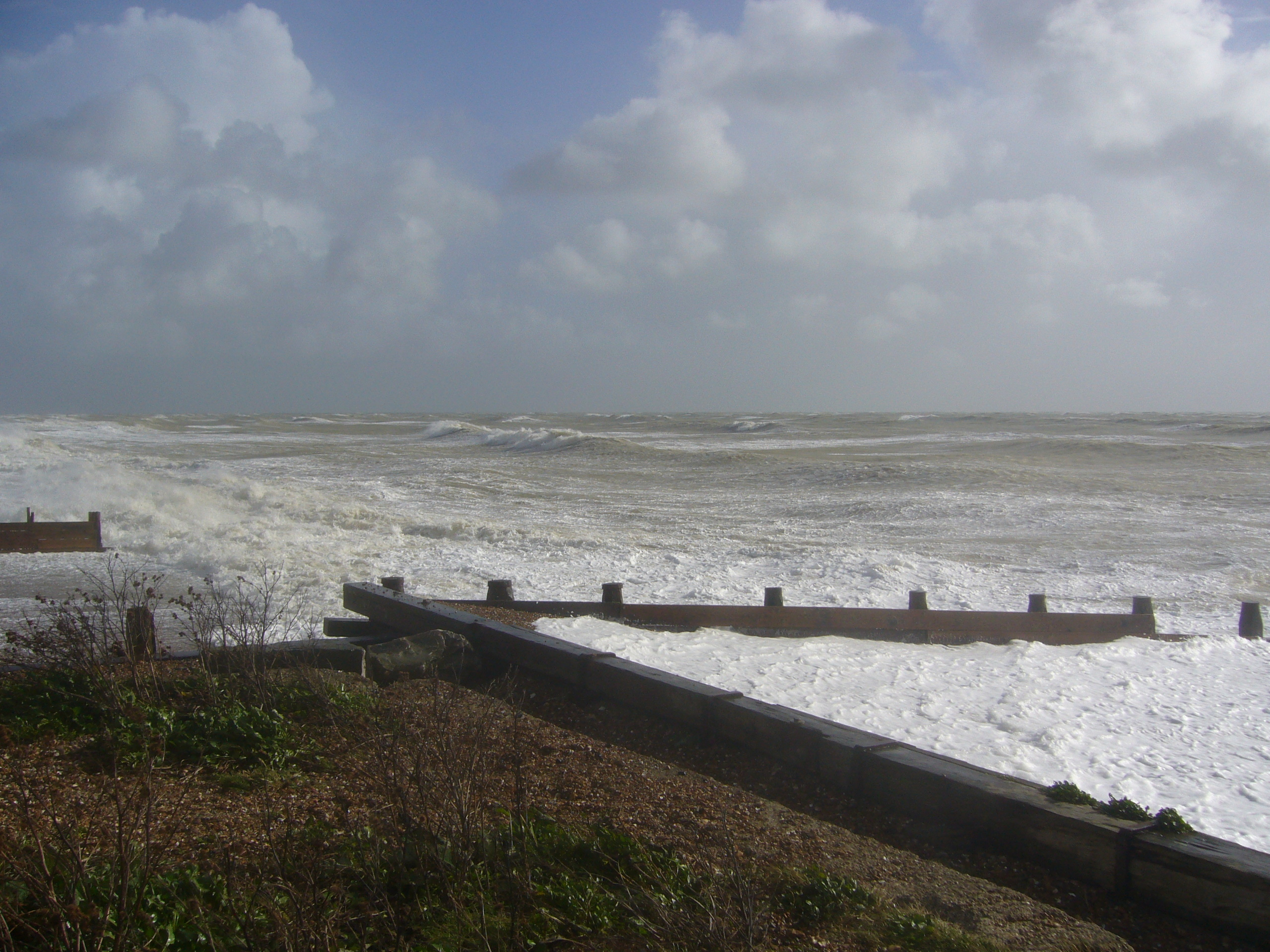
Thanks to equipment supplied by Southern Water, three designated sampling points have now been established to support local campaigners in tracking water quality. These complement the Environment Agency’s weekly testing programme carried out from May to September each year.

While water quality at Goring Beach and Heene Road has improved and is now officially rated “good”, the stretch near Beach House Grounds remains classified as “poor.”

Vicki explained that multiple pollution sources may be contributing to the issue, including urban run-off carrying litter, chemicals, mis-connected or damaged sewer infrastructure, natural waste from wildlife and dogs, as well as human impacts such as improper waste disposal on the beach.

Investigations are ongoing, supported by improved signage and the launch of the Yellow Fish campaign, which aims to raise awareness that pollution entering roadside drains flows directly into the sea.

Following Vicki’s presentation, Alex Finch, Water Quality Specialist at Southern Water, spoke about the company’s efforts to support Worthing Borough Council in improving coastal water quality. He acknowledged the company’s past challenges—including illegal sewage discharges that resulted in fines and regulatory red ratings—but highlighted progress made through the identification of pollution sources.

Using a bell-curve chart, Alex illustrated the risks posed by harmful bacteria such as E. coli and viruses like norovirus, which can cause gastrointestinal illness in humans. He reaffirmed Southern Water’s commitment to reducing storm overflow releases and continuing work to tackle contamination concerns.

Seasonal mince pies accompanied cups of tea during a short break followed by Nature Notes, presented by Graham Tuppen. The following birds had all been spotted at Widewater, a man-made lagoon at Lancing, including Turnstones, Coots, Black Swans, Cormorants, Goosander, Heron, Little Egrets, Little Grebes, Moorhens, a silver Appleyard (a domestic breed of duck) as well as an unusual visit from a Slavonian Grebe.
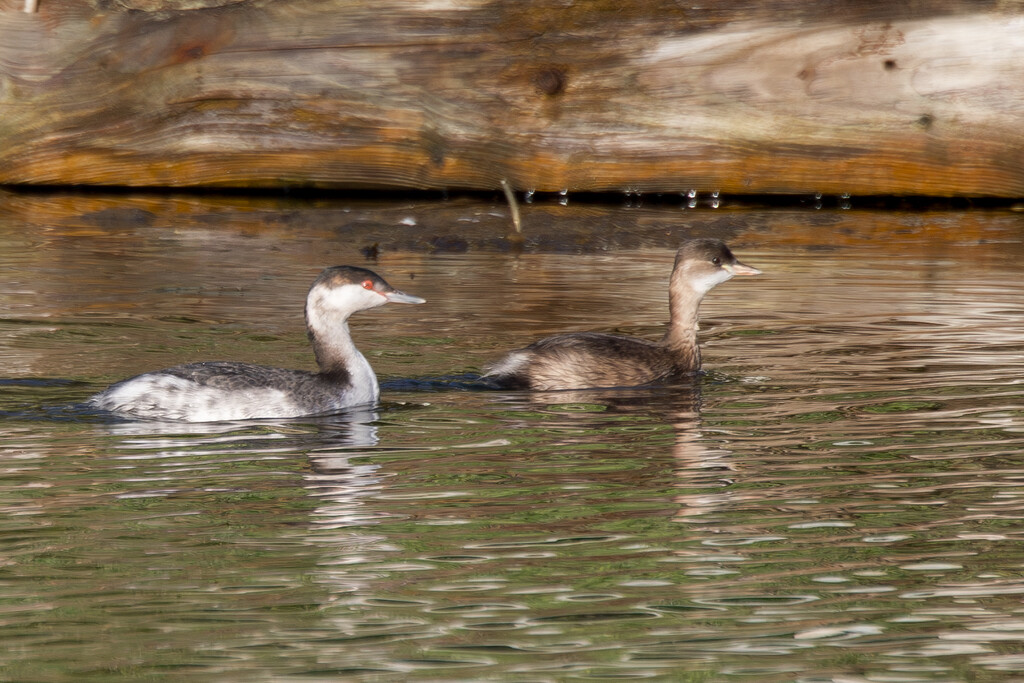
Clive Hope had seen waders on the beach at Ferring and Goring consisting of over 60 Oystercatchers, 40 Sanderlings, a few Turnstones and the odd Grey Plover, Dunlin and Ringed Plover. On the sea Clive spotted 12 Great Crested Grebes and 8 Red-breasted Mergansers.

On the west side of the Ferring Rife an influx of Blackbirds, Reed Buntings and Chaffinches joined a good number of Linnets and Goldfinches there. Also one Blackcap and a couple of Song Thrushes.

Stephen Abbott concluded the meeting by updating members with local planning news. Change of use for industrial units on the slopes of Highdown Hill have been submitted. The application for a footpath registration submitted by Ferring Conservation Group had been formally accepted and would be decided in due course.
Sussex Wildlife Trust

January 2026 – The ‘No’ Year Resolution

By Kerry Williams: Communications Officer – Conservation, Sussex Wildlife Trust

Happy New Year! However you choose to celebrate, I hope your festive season was full of peace, joy, and mega loads of cheese. I always have a new year’s resolution and try to make them positive. Apologise less. Dance more. Wear the shoes. Before you stop reading for fear of me going full ‘live, laugh, love’ don’t worry, I’m heading somewhere.

2026 is going to be the year of boundaries. As well-meaning humans, and especially in the UK, we can be a little too agreeable, put up with stuff, get on with it. But as nature illustrates, it doesn’t have to be this way.

There are not many better boundary-setting role models than those species who ward off others as standard. Camouflage antithesis, these creatures make themselves obvious to warn incomers that they’re not to be messed with. It’s called aposematism, a defence mechanism utilised by certain species across the board; invertebrates, plants, mammals, birds, fish and fungi. Told you I had a point.

There are a few different types of aposematism.

Aposematic colouration: deliberately bright colours to visually warn of a toxic taste to others (whether this is true or not). Think ladybirds, wasps and Cinnabar moth caterpillars, who are bright yellow to mirror the toxic traits taken on by their favourite food plant – Ragwort. Then there are Cuttlefish, whose colour-changing skills give them the option of disguise or bold vibrant attack.

Olfactory aposematism: repelling predators by producing a smell or foul-smelling substance. This dirty card is played by several species of shield bug, sometimes harshly but accurately known as stink bugs. Many plants are notable for this feature, including the strong-smelling Wild Garlic.

Auditory aposematism: sound as a deterrent. Many species make alarm calls to expose a nearby predator, like a Robin tick-ticking at the sight of a cat. But auditory aposematism is making a sound to directly warn of one’s own danger or distaste to others. A famous example is the Rattlesnake, which clatters its tail to give the heads up – “it’s not worth it mate”. Closer to home, the Garden Tiger moth rubs its wings together to make a rasping noise to the same effect.

Symbolic or tenuous, there’s no doubt these creatures have mastered the art of communicating their boundaries. In nature there’s no awkwardness, no deeper meaning, no overthink – imagine! So, in nature’s honour, this year I’ll be saying a lot more ‘no’. Hopefully with no need for any olfactory assistance.

Emergency beach clean

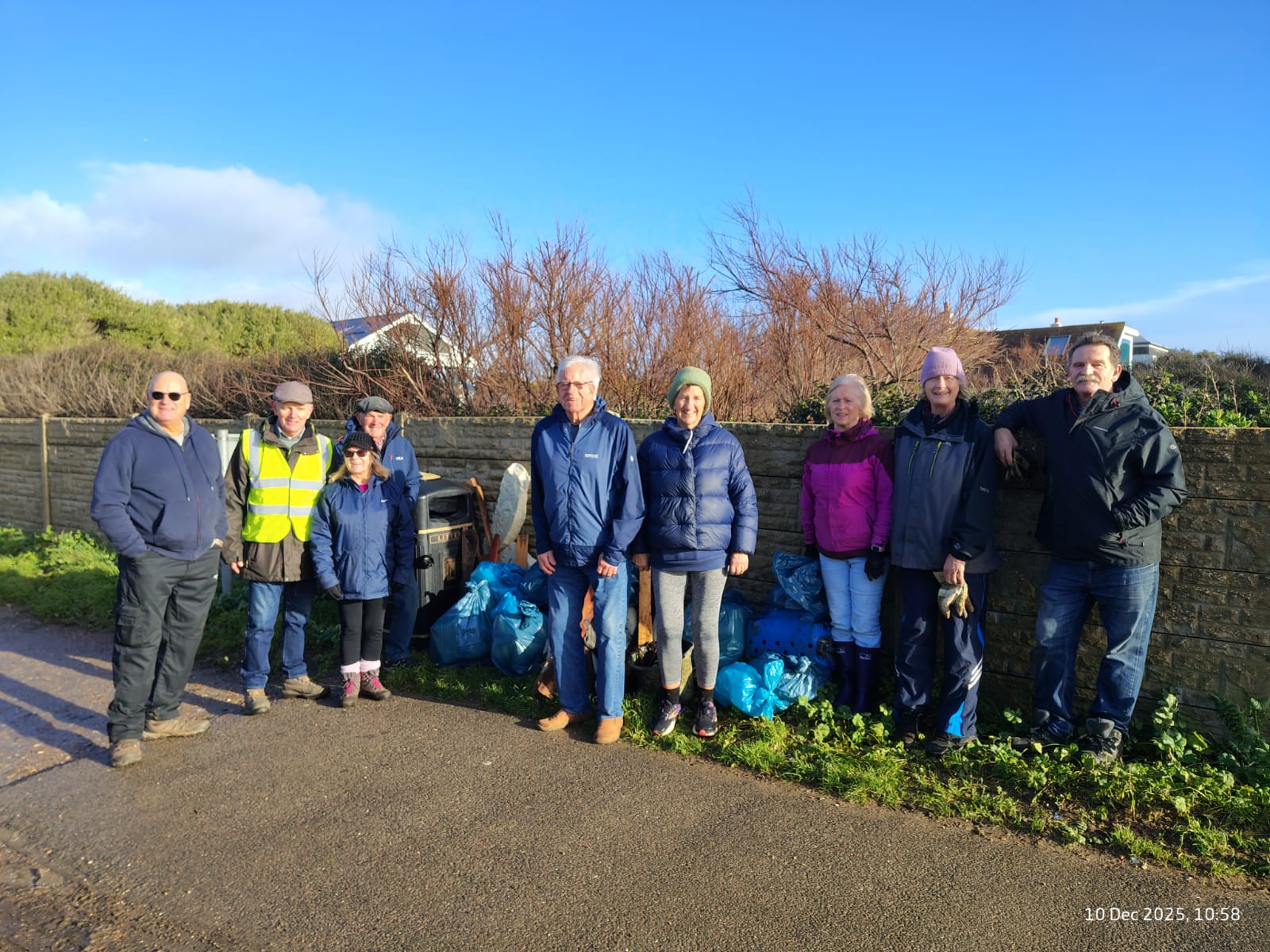
Many thanks to our team of volunteers who turned out this week to help clear our beach at Ferring of all the rubbish

Part of our clean up team with the rubbish collected

that has washed up here recently. There was a significant amount of polystyrene from the ship incident in the Channel plus more items such as fishing gear, nylon rope and others bits as a result of the stormy weather.

We did escape the worst of the incident, which sadly has affected the beaches at Selsey, Pagham and Bognor in a serious way, but at least for the time being, we have a clean beach again. The cleansing offcer at Arun DC is very grateful for all our efforts and wanted to pass on his thanks.

We’ll continue to monitor the area and if necessary, we will again call for an impromptu clean up.

Swift nest boxes in Ferring

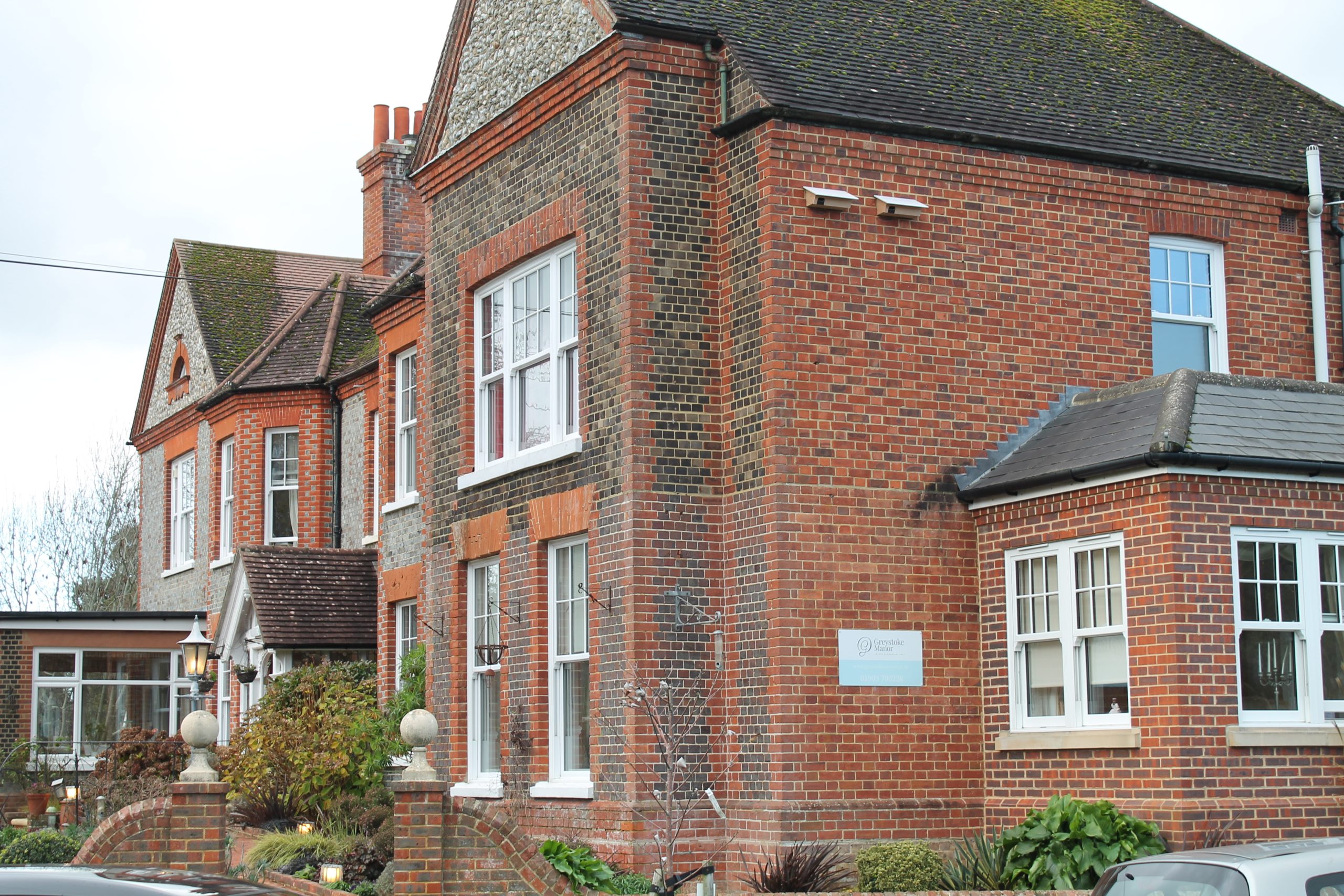
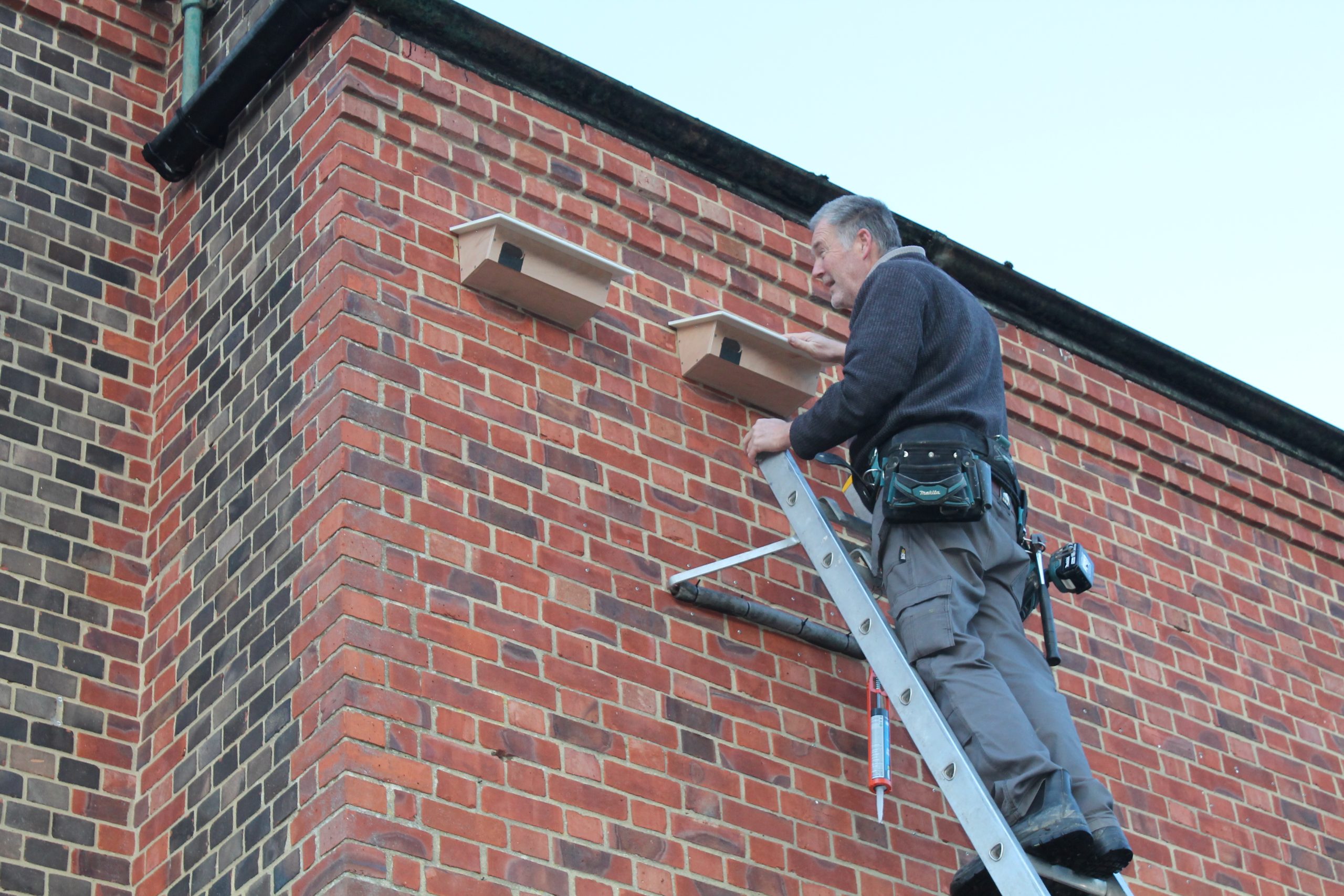
This week, the first two Swift nest boxes in Ferring were installed at Greystoke Manor Residential Care Home in Church Lane by one of our local Swift Champions, Paul Stevens. The owner of the home, Mr Bradley, kindly funded these and we are very grateful to him.

We have also got agreement from four other properties in the immediate area to install a further 8 boxes and it is hoped this will happen in January. These include at the St Andrew’s Church Centre.

As many of you will know, Swifts are in serious decline and one of the main reasons is the loss of their nesting sites, so we hope that by providing these boxes, we can build a colony of birds around the Ferring Conservation Area over a period of time. Alongside the boxes, we hope to put in a number of “callers” – small speaker devices that put out the bird’s call and these have proved successful elsewhere in attracting the birds to nest in the first place.

This is only the start of this project, which we hope to develop further in other suitable nearby properties and start a real “Swift Street” here in Ferring.