Morning visit to Knepp

We’ll be holding a morning visit to the Knepp Estate (just off the A24 at Dial Post) on Weds 13 May, meeting there at 10am and walking for a shortish distance on the footpaths, guided by a couple of our wildlife experts. We should be seeing the nesting White Storks, as well as hopefully hearing and possibly seeing Nightingales and maybe even a Turtle Dove, plus any other wildlife attracted to this excellent place, so do bring your binoculars.

The visit will last for around a couple of hours. There is parking on site, and there is a cafe and toilet facilities. From 1 May, there will be a £3 parking charge for up to 3 hours, and payable by card only (although this will be refunded if you happen to spend more than £20 in the shop etc). This is a “get yourself there” visit but if anybody would need a lift, please contact David at d.bettiss@btinternet.com and we’ll see what we can arrange.

Update as of 0900 Tuesday 12/5 – the visit tomorrow is still ON. Forecast isn’t perfect with possibility of showers and some wind, so please bear that in mind clothing wise

Other dates for May:

Thursday 7 May –  Monthly work party at Warren Pond 10am

Saturday 9 May – Pill box opening 1030am to 3pm

Sunday 17 May –  Beach Clean 11am

Sussex Wildlife Trust

The Sussex Kelp Recovery Story

By Kerry Williams: Communications Officer – Conservation, Sussex Wildlife Trust

Five years ago, the Sussex Kelp Recovery Project was born. The story starts with seaweed.

Kelp; a large brown seaweed, used to be plentiful off the Sussex coast. Imagine this forest of the deep, creating a habitat for marine wildlife. Black Sea Bream would dig and spawn in gravel nests. Blue Mussels would provide a grounding for the kelp to attach to, and engineer further resources for others, like Starfish and Plaice.

The chalk reef outcrops would writhe with life; scuttling Spider Crabs, swaying ethereal-looking Piddocks and the occasional fin-flap of an Undulate Ray. Seals would benefit from these supreme hunting grounds. From above, Gannets would spear the surface to take their fill of the abundant beneath-the-waves buffet. And so, safely and sustainably, could we.

In the 1980s things changed. Storms, marine heatwaves and poor water quality had a negative effect, and persistent damage has been caused by intensive trawling for commercial fishing. This indiscriminate practice decimated the biodiversity of the seabed. By the end of the century, 96% of Sussex kelp was lost, and with it, a whole ecosystem wiped out, in repeated, traumatic acts of destruction. All happening under the waves; beneath our noses, yet out of sight.

But some people did notice. Sussex IFCA formed a case for a Nearshore Trawling Byelaw, and production company Big Wave created Help our Kelp, a film narrated by Sir David Attenborough. Other organisations joined the fight, and a campaign of the same name was launched.

It worked. In March 2021, trawling was prohibited from 304 square kilometres of the Sussex coast. The byelaw is one of the largest in the UK. The collective became the Sussex Kelp Recovery Project; twelve organisations*, co-ordinated by Sussex Wildlife Trust, who have continued to monitor and advocate for the recovery of our seabed.

Benefits are underway; Black Sea Bream and Blue Mussels are on the increase. But nature takes time to recover. These five years have been focused on laying the groundwork to enable the steady return of these great forests and their inhabitants. Rewilding our ocean, piece by piece. With patience and collaboration, the story of our Sussex shores gets wilder each year. Although it started it all, really, kelp is just the beginning.

*Sussex Wildlife Trust, Blue Marine Foundation, Zoological Society of London, Queen Mary University of London, University of Brighton, Adur & Worthing Councils, Sussex Underwater, Big Wave Productions, Sussex IFCA, University of Exeter, University of Sussex
May Practical Activities

On Thursday 7 May (election day) we’ll hold our monthly practical activity starting at 10am – this time at Warren Pond. If you can spare an hour, please come along and lend a hand to trim back some of the growth there, and if you have them, please bring loppers, secateurs, trowel/spade/ fork etc.

On Sunday 17 May,  there will be the first of 2 beach cleans this year. This starts at 11am at the east end of the Bluebird Cafe car park as usual. Bags, pickers and high vis jackets are supplied. It’s important to find and pick up the small pieces of plastic and fishing gear there (as well as the larger items), so please help us do this. Again this should only take an hour to complete, and if any doubt about the weather on the day, please check this website in case of any late changes.

March meeting – Richard Jefferies and WH Hudson

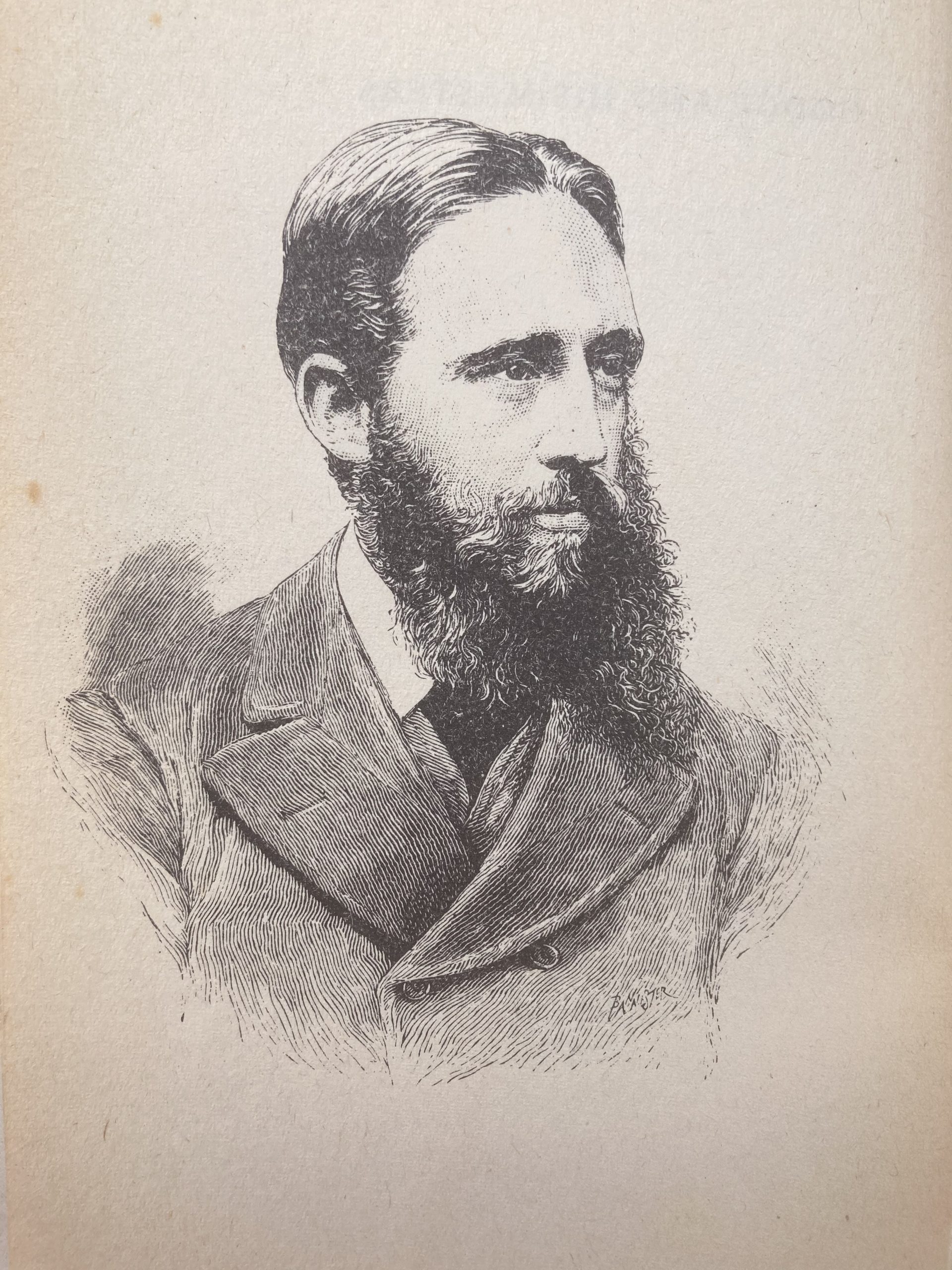
The March meeting heard a fascinating account of the life and writings of Richard Jefferies, a Victorian author and country-lover who spent the last years of his short life in Goring and is buried in Broadwater Cemetery. Chris Hare told the story of his upbringing on a small farm in Wiltshire, his work as a journalist in London and his move to Sussex in 1883 for the sake of his health., first to Crowborough, then to Hove, and finally to Goring. His house is still there, in Jefferies Lane, off Sea Lane, with the blue plaque set up in 1939.

Jefferies wrote many articles and a few novels about the countryside, but he was not a scientific naturalist. His writing is more an evocation of country life as it was lived by the shepherds, farm labourers and woodsmen, their dignity and simplicity. He refused to patronise or romanticise them but showed how they experienced the natural world in a direct and transcendental way that townsmen and city dwellers could only feel when they were in intimate contact with the fields, woods and streams and opened their minds to the beauty around them.

He loved the South Downs, as an almost primeval landscape still haunted by the ancient peoples that lived and worked there .He hated Brighton for its vulgarity, and Hove even more so for its mean streets and grandiose town hall. Jefferies died in 1887, at home in his cottage, of the tuberculosis that had plagued him for many years. He was just 38. In 1899 the naturalist and writer WH Hudson stayed in the house where Jefferies died, and here he started writing his book Nature in Downland, which he believed Jefferies would have written had he lived longer.

The well-attended meeting had a review of local wildlife from Graham Tuppen, including sightings of Peregrine Falcons, the Kingfisher on the Rife, early Bluebells and anemones in Patching Woods, and butterflies appearing everywhere. Stephen Abbott gave an update on local planning decisions appeals and applications – the most alarming of which was for a large housing estate on the fields opposite Sainsbury’s in Rustington.

Patching Woods Bluebell Walk – April 2026

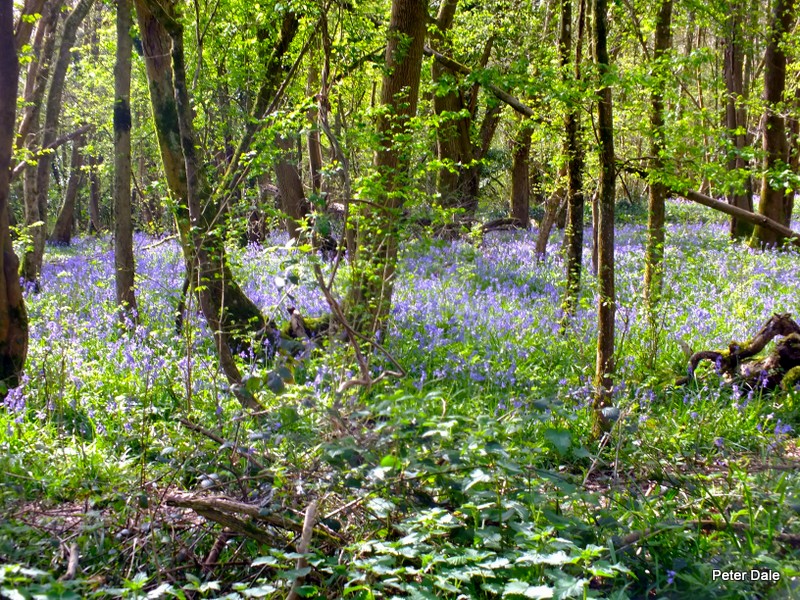
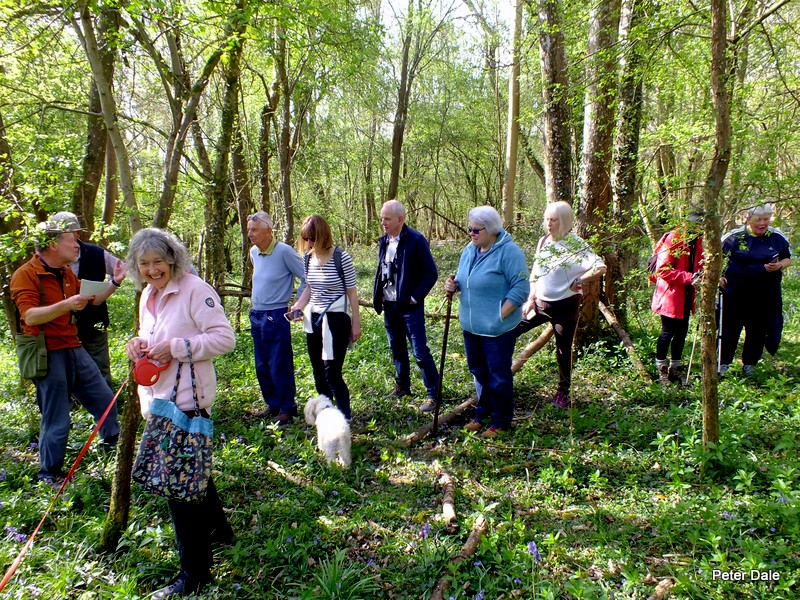
On Thursday 9th April 13 group members, and 2 dogs, met in the sunshine on France Lane, Patching for a walk in the woods, led by Graham Tuppen. The object was to admire the sight and scent of the lovely carpet of native Bluebells, which were at their best. Alongside these, there was a good show of lovely Wood Anemones, Wild Primroses, Celandines and Violets. We also found a good colony of Early Purple Orchids, but they were only just beginning to come into flower.

We also saw Greater Stitchwort, Dogs Mercury, Garlic Mustard (Jack by the Hedge), Lords and Ladies (Wild Arum), Ground Ivy, Red and White Dead Nettle and Red Campion.There were few butterflies despite the sunshine, but we did see a Comma, Orange-Tip and a Peacock.

5 Buzzards were circling above Angmering Park woods, and we also saw a Kestrel, Sparrowhawk, Cock Pheasant, Yellowhammers and Linnet. Merlin, the birdsong app, picked up Wrens, Chiffchaffs, Goldfinches, Rooks and Carrion Crows.

Sadly we were asked to leave Jewshead Wood by representatives of the owners because, unknown to us, it is privately owned, and it appears that it is likely to be fenced off in the near future, which will deny us and other responsible people access to view this wonderful spectacle in years to come.