Ray Hale took Ferring Conservation Group members on a tour of British wildlife at its 31 July meeting, with a selection of the photographs he had taken in a lifetime of study and observation in Britain and south-east Asia,
His main interest was insects – he said there were 21,000 species in the UK – and especially spiders, of which there were 650 species in the UK. There were tens of thousands of species worldwide, including the tarantulas. Like our own Wolf Spider, these were hunters that did not spin webs, but their prey was other insects, earthworms and small amphibians – not animals or humans. Even the so-called ‘Bird-eating’ tarantulas did not, in fact, eat birds.
Britain had its share of exotic spiders, he said, including the Crab Spider, which, like a chameleon, was able to change colour to merge with its background, and the Jumping Spider, which could jump 10cm (4 inches). He was once called out by a local newspaper and television reporter to find the ‘giant spiders’ that had draped an entire hedgerow with its web. This turned out to be not spiders but a cluster of Ermine Moth caterpillars who create very large webs, each containing hundreds of caterpillars, to shelter and protect them as they move into their chrysalis stage.
He had also been asked many times about ‘very small snakes’ which are, in fact, the long caterpillars of the Elephant Hawk Moth. They have prominent spots at their rear end, which look very much like eyes on a head, to the confusion of predators.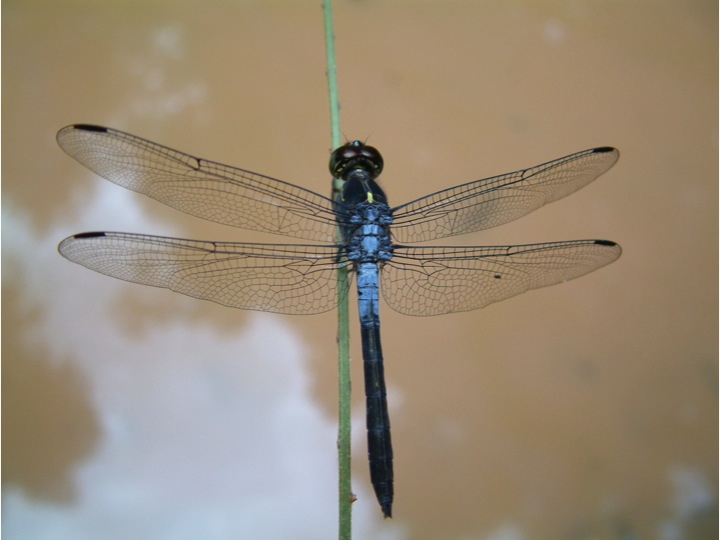
He also highlighted the variety of Dragonflies and Damselflies that can be seen in Sussex, and the fact that the former can be identified by their habit of spreading their wings out at rest at right angles to their body, whilst Damselflies fold them in.
After this interesting and lively talk, Graham Tuppen reported on the recent ‘field day’ with St Oscar Romero School and on various local sightings, including a Pine Marten photographed in a Worthing garden, and the arrival of a large number of Jersey Tiger moths, an unusual appearance in Sussex. There have also been at least a couple of recent sightings of pods of Dolphins in the Channel off Ferring.