The Story of a Ferring Wildlife Garden – our January 2026 meeting

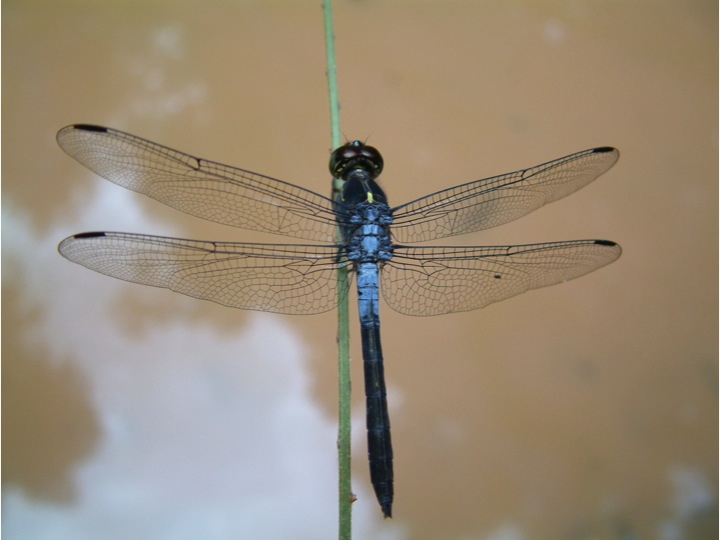
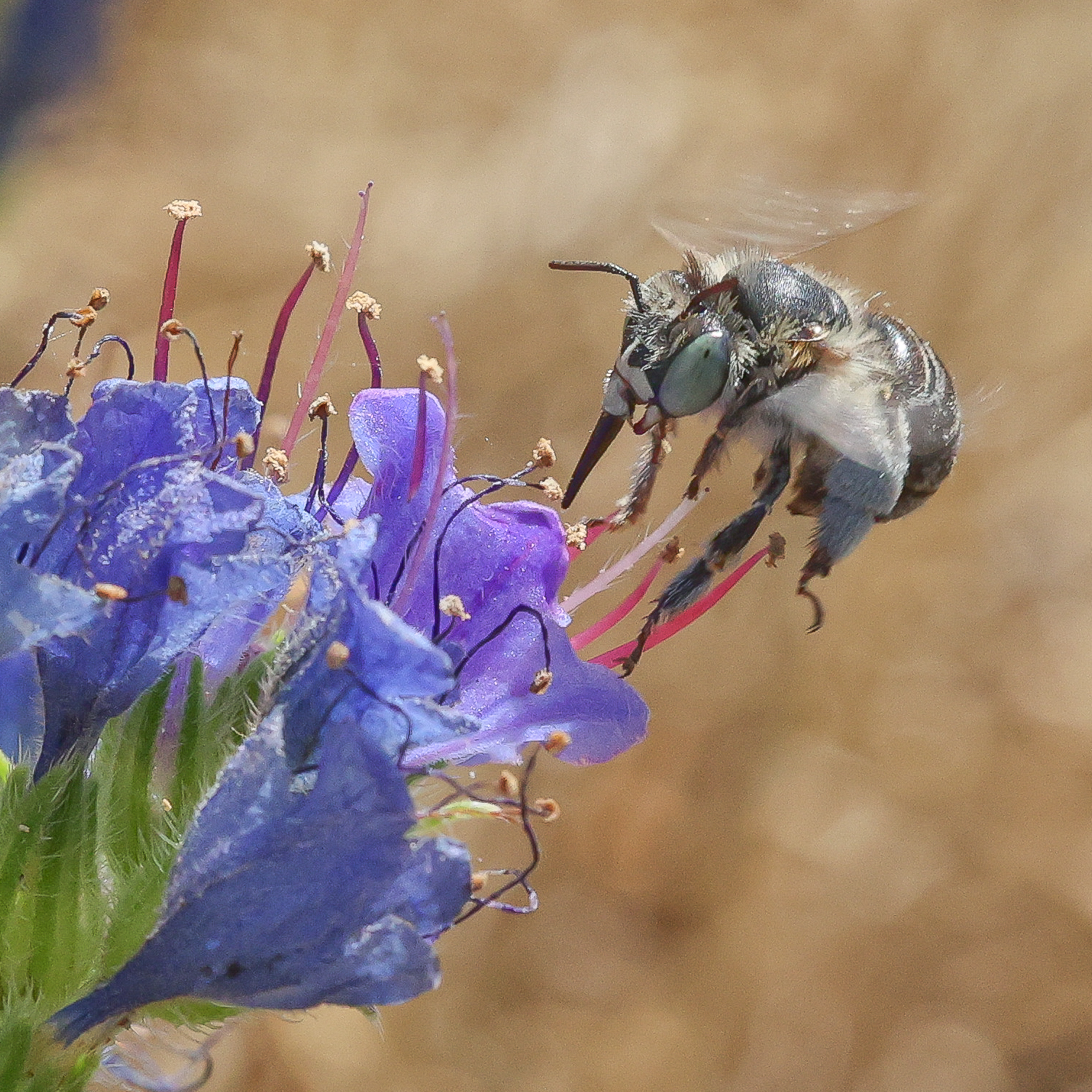
Dr Tim Freed, a dedicated entomologist of many years and a Group member, gave an enlightening presentation on how he has transformed his private garden in Ferring into a carefully managed refuge for wildlife.

What began as a conventional garden has been steadily reshaped into one designed purely as a sanctuary for the widest range of wildlife possible.

Tim’s lifelong fascination with insects prompted him to take a gradual and experimental approach. Firstly, small areas of lawn were left uncut and Tim was encouraged by the many native species of wildflowers that quickly established themselves.

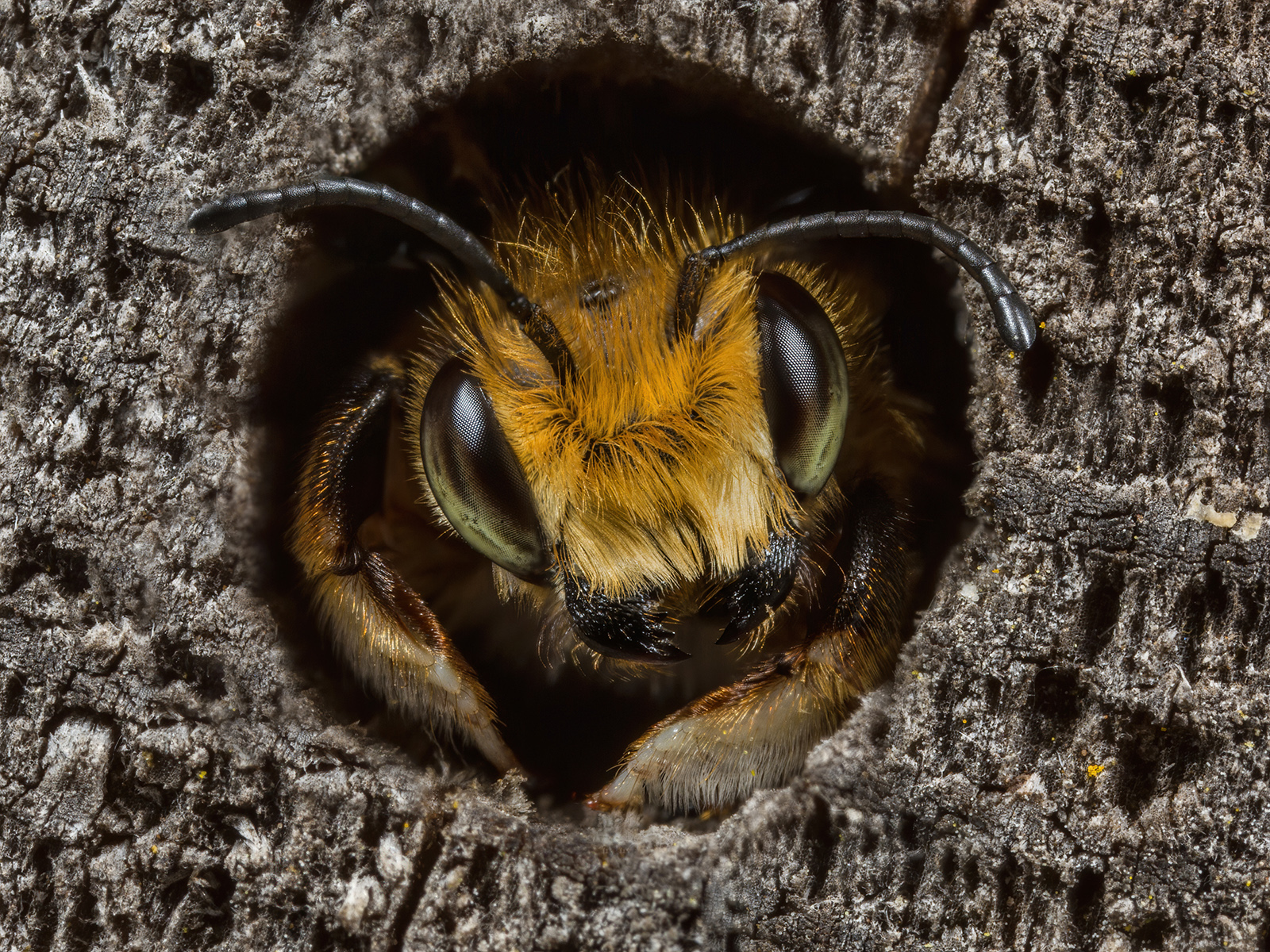
This motivated Tim to allow larger areas of lawn to naturally grow further areas of wildflowers. This very soon resulted in attracting many pollinating insects. Advice was taken on which shrubs to plant to add value to pollinators and specialist insects. Dead wood was retained rather than cleared, providing habitat for beetles, fungi, and nesting bees. Ponds and damp areas were introduced to support aquatic insects and their predators.

Tim’s vision extended beyond insects alone: the garden was intended to support interconnected food webs, from soil microorganisms to birds, amphibians, and small mammals.

This approach demanded patience and a willingness to accept visual disorder in favour of biological complexity.

The process was not without difficulty. Establishing a wildlife-friendly garden required significant physical labour, ongoing observation, and continual learning. Progress was often slow, and setbacks such as plant failures, extreme weather, or invasive species were frequent. Social challenges also arose: neighbours sometimes viewed the untidy appearance of the garden as neglect rather than intention, requiring Tim to repeatedly explain and defend his approach.

The many stunning photographs of the species now present in the garden helped to illustrate the importance of Tim’s work and to encourage the audience to try this technique in areas of their own gardens.

After the usual break for tea and biscuits Stephen Abbott took to the floor to discuss local planning issues. A new planning application has been submitted for a dwelling to be built on a small piece of land on the corner of Brook Lane. The Ferring Men in Sheds group are proposing to build a wooden shed behind the pumping house on the Glebelands playing field. Roundstone Pick Your Own Farm is now closed due to the retirement of the proprietors.

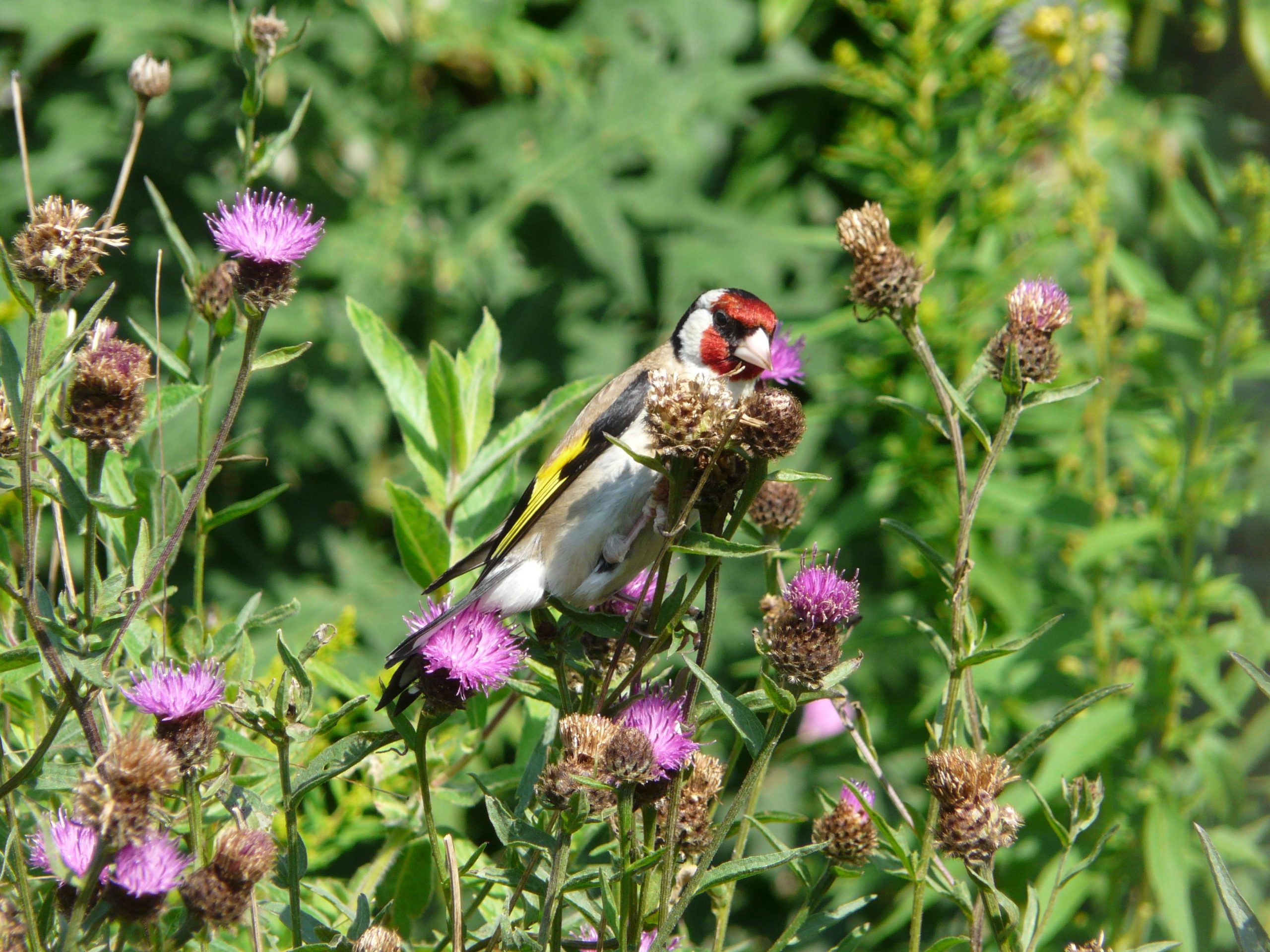
To conclude the meeting Graham Tuppen advised members and visitors on local wildlife sightings with news of several Goldfinches in his garden. Clive Hope had spotted a Mistle Thrush and a Goldcrest near to the farm ruins in Sea Lane. Peter Dale had seen Great Tits and Goldcrests locally plus Oystercatchers, Sanderlings and a Lapland Bunting had all been seen on Ferring beach in the last week or two, as well as a Snow Bunting at the Witterings.


Sea Water Quality – November 2025 meeting

At our November meeting, Ferring Conservation Group was pleased to welcome Cllr Vicki Wells, Worthing Council’s Cabinet Member for Environmental Services, who provided an informative update on the latest sea water quality findings along the Worthing coastline.

Drawing on her background as a science producer for the BBC, Vicki is committed to strengthening community involvement in local environmental monitoring. She recently joined members of a local swimming club to take part in seawater testing, helping to ensure that citizen-collected data contributes to a fuller and more accurate picture of coastal water conditions.

Thanks to equipment supplied by Southern Water, three designated sampling points have now been established to support local campaigners in tracking water quality. These complement the Environment Agency’s weekly testing programme carried out from May to September each year.

While water quality at Goring Beach and Heene Road has improved and is now officially rated “good”, the stretch near Beach House Grounds remains classified as “poor.”

Vicki explained that multiple pollution sources may be contributing to the issue, including urban run-off carrying litter, chemicals, mis-connected or damaged sewer infrastructure, natural waste from wildlife and dogs, as well as human impacts such as improper waste disposal on the beach.

Investigations are ongoing, supported by improved signage and the launch of the Yellow Fish campaign, which aims to raise awareness that pollution entering roadside drains flows directly into the sea.

Following Vicki’s presentation, Alex Finch, Water Quality Specialist at Southern Water, spoke about the company’s efforts to support Worthing Borough Council in improving coastal water quality. He acknowledged the company’s past challenges—including illegal sewage discharges that resulted in fines and regulatory red ratings—but highlighted progress made through the identification of pollution sources.

Using a bell-curve chart, Alex illustrated the risks posed by harmful bacteria such as E. coli and viruses like norovirus, which can cause gastrointestinal illness in humans. He reaffirmed Southern Water’s commitment to reducing storm overflow releases and continuing work to tackle contamination concerns.

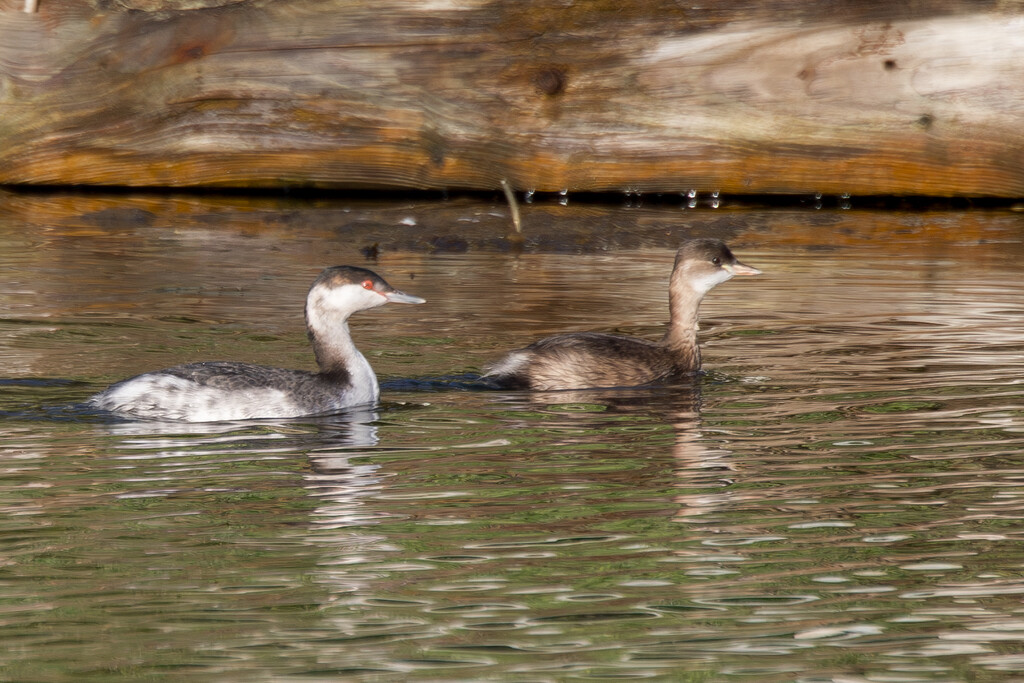
Seasonal mince pies accompanied cups of tea during a short break followed by Nature Notes, presented by Graham Tuppen. The following birds had all been spotted at Widewater, a man-made lagoon at Lancing, including Turnstones, Coots, Black Swans, Cormorants, Goosander, Heron, Little Egrets, Little Grebes, Moorhens, a silver Appleyard (a domestic breed of duck) as well as an unusual visit from a Slavonian Grebe.

Clive Hope had seen waders on the beach at Ferring and Goring consisting of over 60 Oystercatchers, 40 Sanderlings, a few Turnstones and the odd Grey Plover, Dunlin and Ringed Plover. On the sea Clive spotted 12 Great Crested Grebes and 8 Red-breasted Mergansers.

On the west side of the Ferring Rife an influx of Blackbirds, Reed Buntings and Chaffinches joined a good number of Linnets and Goldfinches there. Also one Blackcap and a couple of Song Thrushes.

Stephen Abbott concluded the meeting by updating members with local planning news. Change of use for industrial units on the slopes of Highdown Hill have been submitted. The application for a footpath registration submitted by Ferring Conservation Group had been formally accepted and would be decided in due course.

“Elizabethan Sussex” at our April meeting

We had a last-minute change of speaker at our April meeting when Helen Poole substituted for Ella Garrud who had fallen ill. Helen’s subject was Sussex in the reign of Elizabeth I. She presented the story through the magnificent buildings which survive from that era and the leading personalities with Sussex connections.

Elizabeth was queen for 45 years, with relative peace at home but continual wars with Spain and France. She had ended the religious persecutions of the earlier Tudors, but Catholics were still liable for fines for not attending Anglican services. The Fitzalans (Earls of Arundel) and the Howards (Dukes of Norfolk) were prominent ‘recusants’ and were involved in various conspiracies to put the catholic Mary Queen of Scots on the throne. The 4th Duke  was executed in 1572 and his son, Philip Howard, born 1557, died in the Tower in 1595, awaiting execution . He was canonised as ‘Saint Peter’ , one of the English Martyrs, by the Pope in 1970. Arundel Castle, Helen pointed out, looked rather different at this time from the heavily restored Victorian version we have today

The Gages of Firle Place, near Lewes, were another prominent Catholic family who were involved in these conspiracies. Robert Gage was executed in 1586, but the house has survived as one of the finest examples of Elizabethan architecture. Helen covered many other notables and their grand houses – some, like Cowdray, where Lord Montacute entertained Elizabeth in 1591, only ruins now but others, like Michelham Priory and Parham, surviving and well maintained and open to visitors.

The other focus of her talk was the continuing war with France, and then Spain. The iron masters of the Sussex Weald were crucial in supplying the cannons, and the shipyards of Shoreham in supplying the ships for the fleet which challenged the Armada of 1588. It was pointed out that Ferring maintained one of the warning beacons installed along the Sussex Coast.

The other highlight of the meeting was the report of three Peregrine Falcons that have been seen on the tower of St Mary’s Church, Goring – and the hope that they may possibly nest there in the future. In addition there have been a number of local sightings of the colourful and exotic looking Hoopoes – birds with a distinctive “crown” of feathers.

Please also note that from now on, we are reducing our current 10 main meetings a year to 6, and these will occur in March, April, June (evening), July (evening), September and November.

“What have Insects ever done for us?” presentation at our March meeting

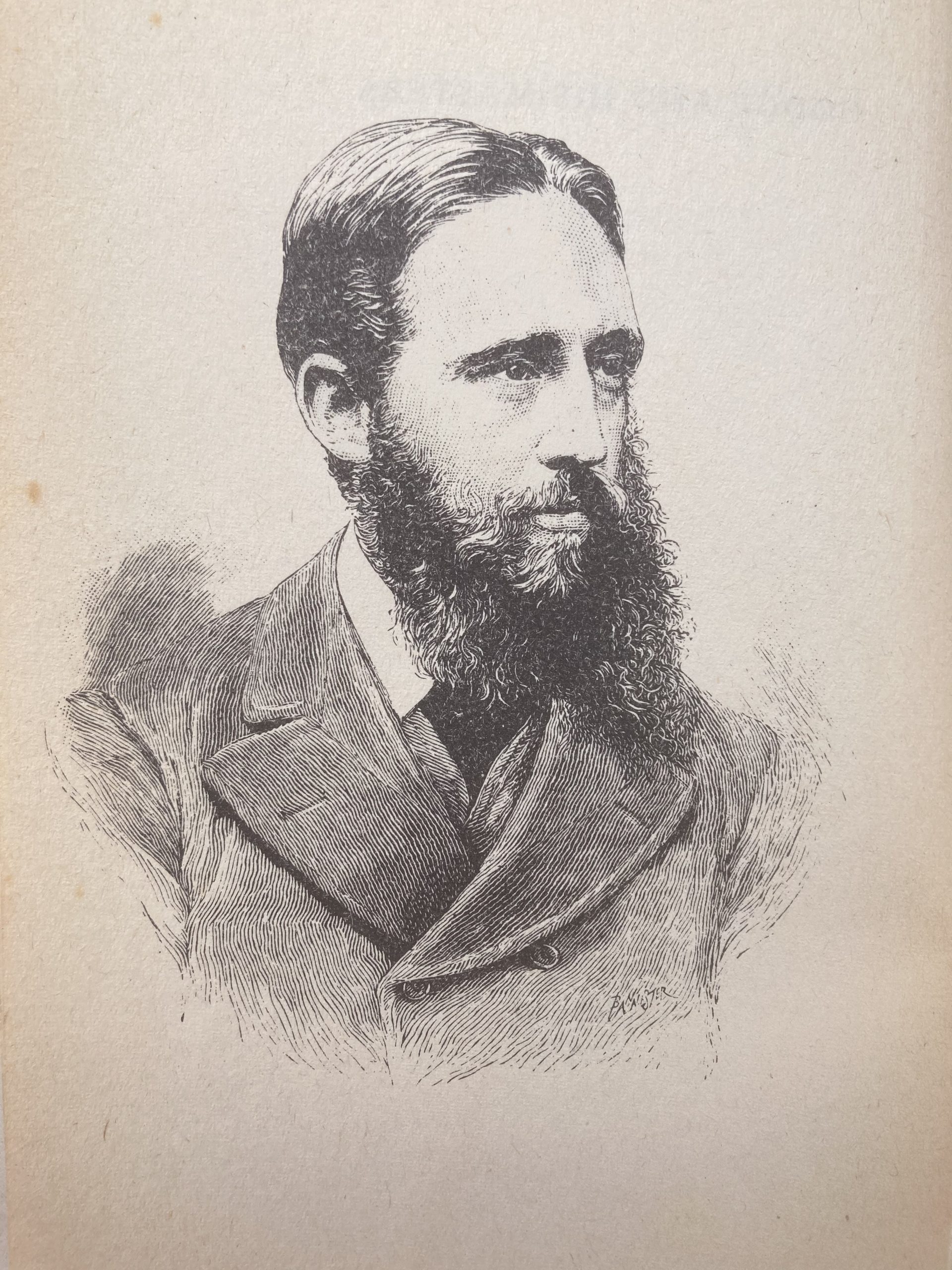
As a well-respected and passionate conservationist, academic, author, television presenter and explorer, George McGavin’s interest in the natural world and especially insects began at a young age, conducting his own rock pool surveys along the beaches on the east coast of Edinburgh where he grew up. This fascination drove George to overcome a severe stammer and become an academic zoologist for 30 years, taking his degree at the University of Edinburgh, followed by a PhD in entomology at Imperial College, London. He then went on to research and teach at the University of Oxford.

George was also at one time the Assistant Curator of Entomology at Oxford University’s Museum of Natural History. Later becoming a popular and regular contributor to the BBC One Show, delighting viewers with his ecology reports and bug-life presentations. George has also presented and advised on many other television programmes including The Secret Life of Landfill and the multi award-winning documentary After Life: the strange science of decay.

George said that insects have model organisms for research into genetics, physiology, behaviour and ecology but their decline will have a very serious effect on wildflower meadow areas which are now very rare with a 97% decline in 50 years (rarer than a rainforest in fact). Also alarmingly in a province of China, farm workers are having to ‘hand pollinate’ pear trees through the decline of pollinating insects.

George hates the popular term ‘sustainable growth’ as he stressed ‘growth cannot possibly be sustainable’. He is especially proud of the fact that several insect species have actually been named in his honour.

A packed audience thoroughly enjoyed his professional and at times amusing presentation, and the afternoon was well and truly rounded off with the announcement by Stephen Abbott that that very morning news had come through that the Planning Inspector had dismissed the appeal by Persimmon Homes to build a large estate of 475 houses at Chatsmore Farm (north Goring Gap). This excellent news was celebrated by those present and the wider local communities as it would have destroyed a much needed Local Green Gap and affected the setting of the adjacent South Downs National Park, as well as causing all manner of local infrastructure issues.

Culberry Nursery at our February meeting

Members and visitors welcomed Martin Jarvis, the owner of Culberry Nursery in Angmering which has been in existence for over 75 years. Martin explained that in the beginning it was run by his parents as a market garden with a 99-year lease where they lived in a caravan on the site; this is where Martin’s sister was born. By the time Martin came along his parents had bought a house and had begun to grow mushrooms which they initially grew in old wooden fish boxes but this soon progressed to greenhouses. Good hygiene became crucial to prevent the introduction of bacteria or viruses to the crops – this also applied to the areas around the greenhouses. Interestingly at one time there were around 100 mushroom farms in West Sussex.

These days, Culberry Nursery only supplies bags of highly regarded mushroom compost and also grows and produces a wide variety of plants, including a large selection of herbs. These are all grown without the use of chemicals and instead beneficial bugs are used.  The Nursery staff attend many local Farmer’s Markets which produces an additional income and much to the delight of the many keen gardeners among the audience, Martin brought along a good selection of plants and herbs to sell during the break for refreshments.

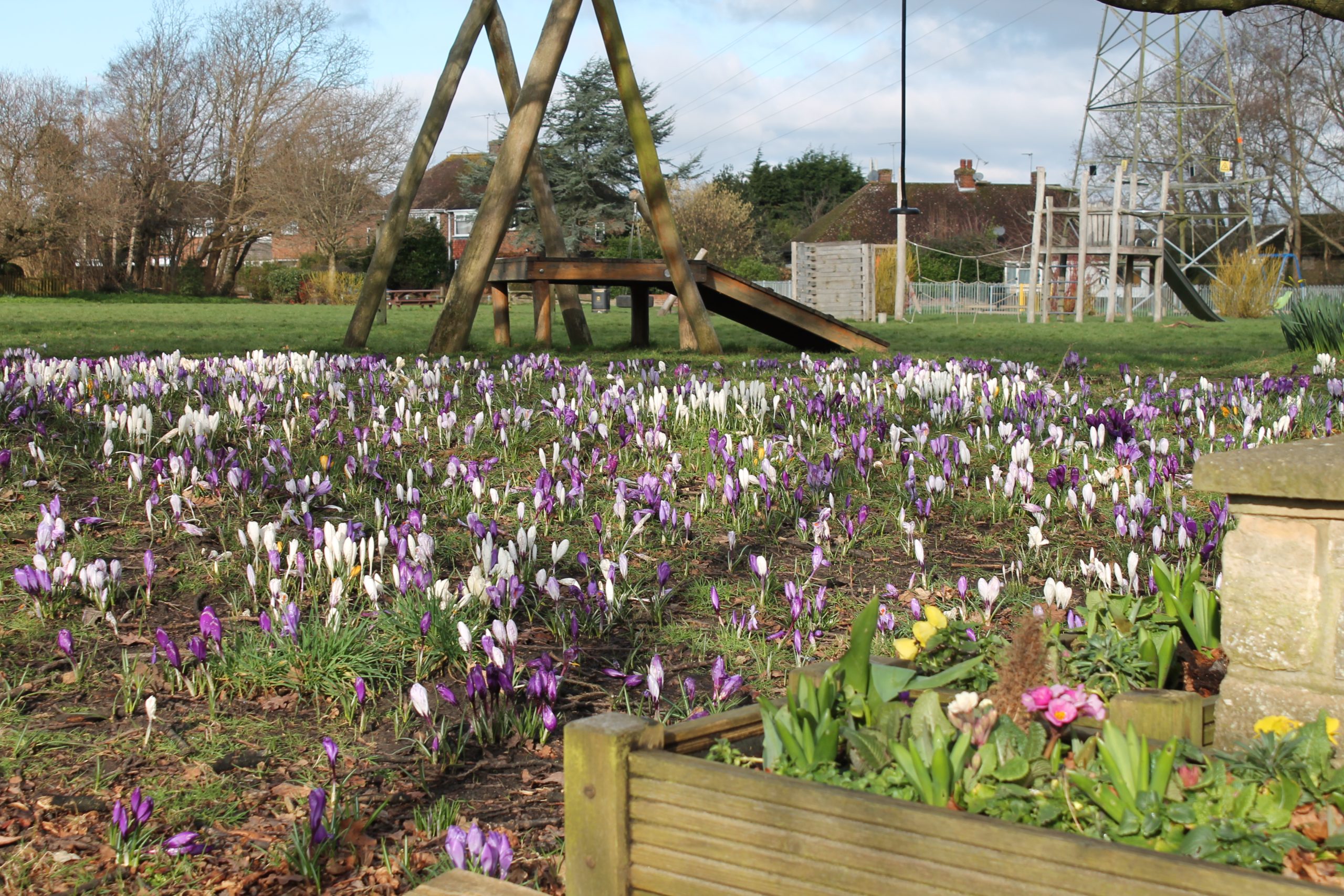
Following a short break, Pete Coe and David Bettiss delivered February’s Nature Notes by showing some excellent photographs of wildlife along the Rife taken by member and keen wildlife photographer James King. There had been many reported signs of spring being sprung, including Snowdrops in Sea Lane, Crocuses on the Village Green, and Daffodils at the Community Orchard. Brent Geese, Chaffinches, Lapwings, Skylarks and a Song Thrush had all been spotted in and around the vicinity. David also delivered the sad news that the body of a deceased dolphin had been washed up on Ferring Beach.

To conclude the meeting Stephen Abbott advised the audience of recent planning news. There is still no decision by the High Court regarding Persimmon’s Appeal on Chatsmore Farm. The planning application for 3 houses at the back of Ferring Nursery remains undecided together with the Pool House proposed at ‘Mayfield’ Florida Road. Stephen also advised the Group of a new application to convert a garage into a self-contained annex at 8A South Drive in Ferring.

Hawking About – January 2025

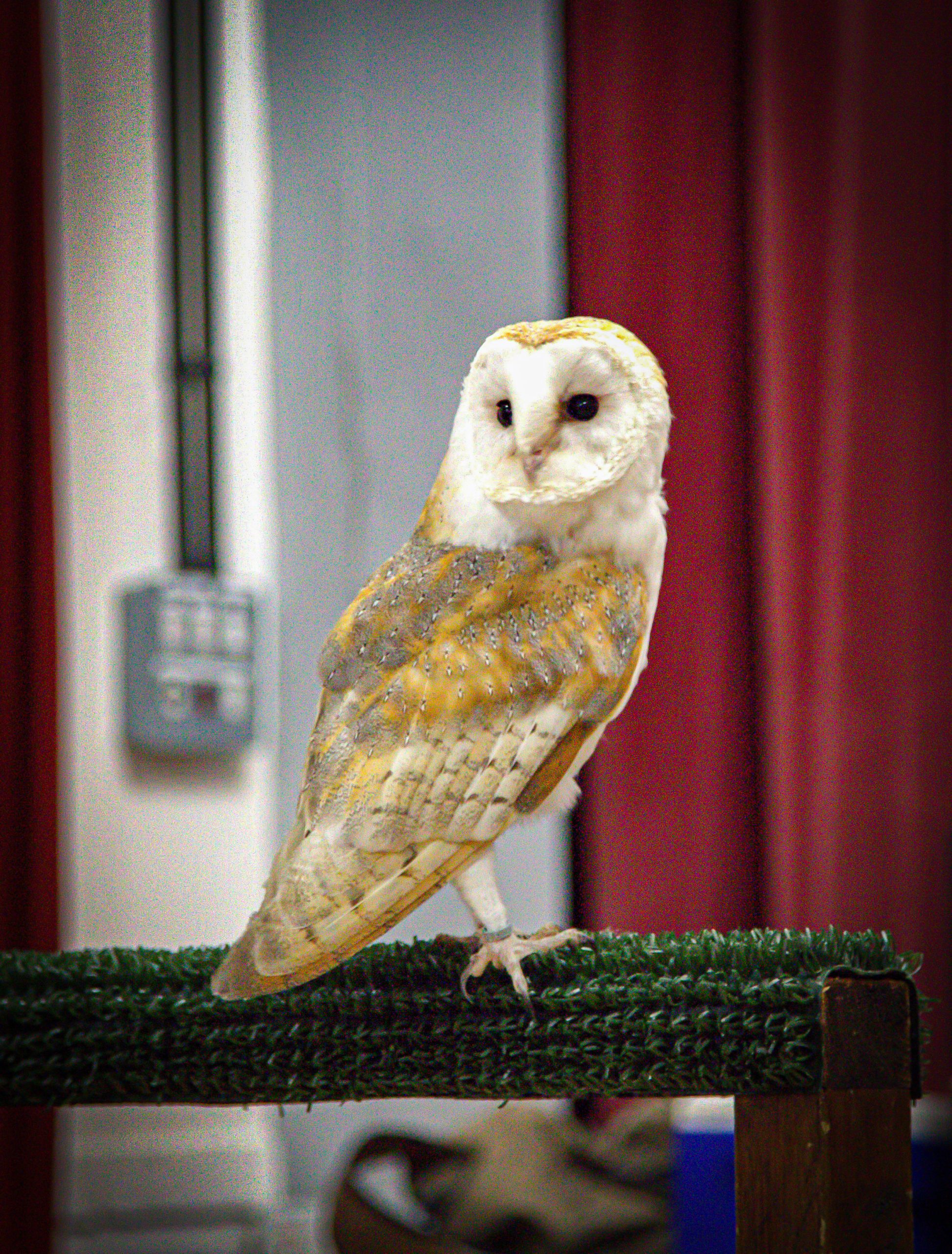
Kevin, the head falconer from ‘Hawking About’ based in Arundel, gave over 100 members and visitors a wonderful opportunity to enjoy getting close and personal to several of his beautiful Birds of Prey, including a Barn Owl, Kestrel, Peregrine Falcon and and two Harris Hawks.

Not only were the audience enthralled by the precision indoor flying displays of these magnificent birds but were also educated along the way by Kevin imparting his extensive knowledge and passion that he had gained over many years. This initially started as a hobby for Kevin and he gradually developed the skills to enable him to train a collection of Birds of Prey and he now attends some of the top tourist attractions in the South of England including Arundel Castle, Parham House, Petworth Park and Natural Trust sites giving talks and flying displays.

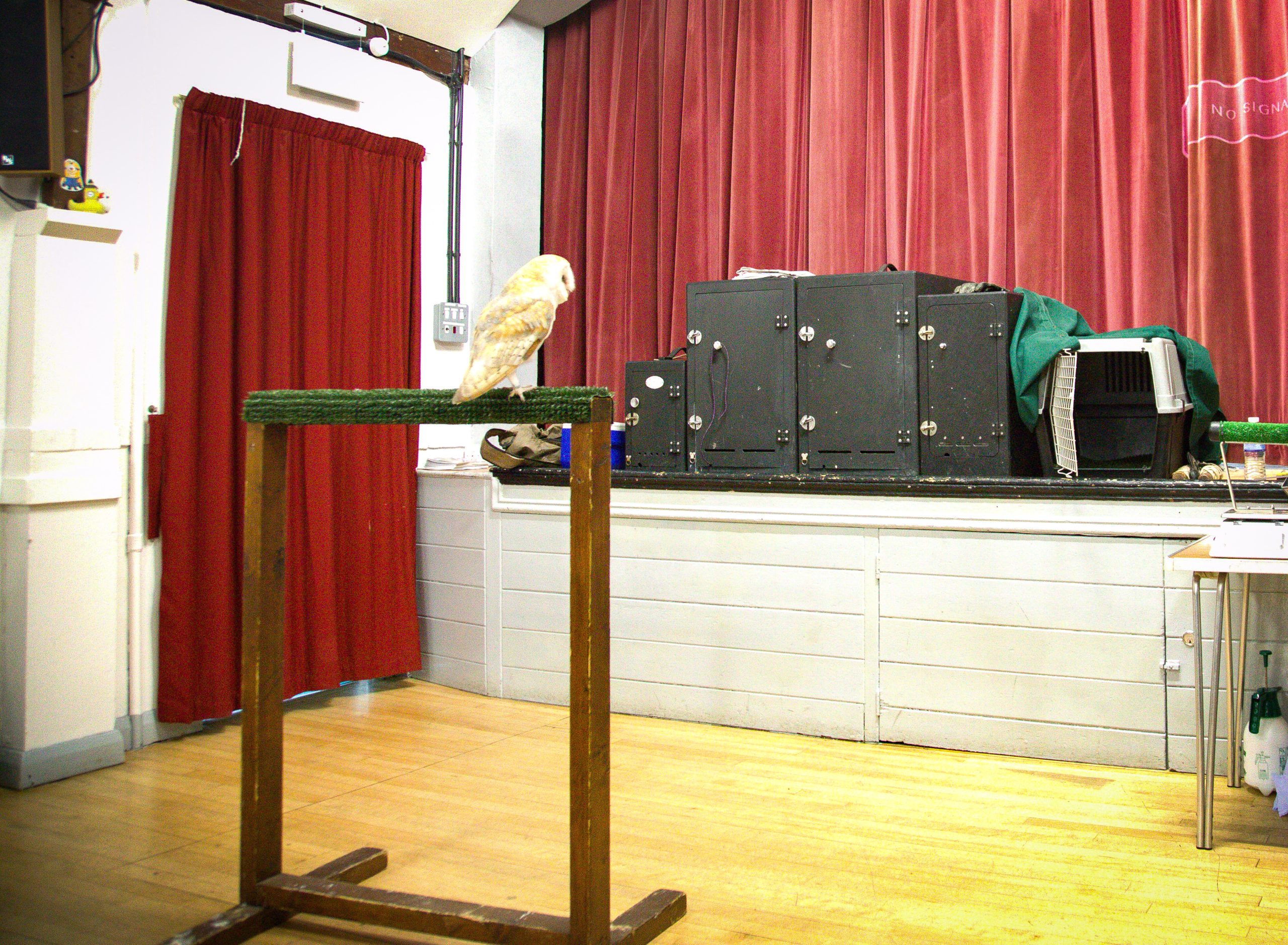
Busby the Barn Owl was the first bird to show off his flying skills and headed straight for the ceiling bars looking down on the audience. With encouragement from Kevin tempting him with a piece of fresh mouse, he swiftly returned straight to his perch to greedily claim his reward.  These birds have an average lifespan of 18 months in the wild and are the most widely distributed group of owls in the UK and they enjoy a variety of habitats, including open countryside, wetlands and roadside verges.

The next bird to show off its flying skills was a pretty Kestrel named Mo whose hunting skills are so well developed and with such razor-sharp vision, he is able to detect mouse urine in ultra-violet from the air but sadly 75% of Kestrels do not survive the winter in the wild.

Kevin then showed the audience the Peregrine Falcon, and these birds are the largest falcons in the UK with the male around a third smaller than the female. Their lifespan in the wild is only around 10 years but in captivity they can live for 25 years. Its distinctive feature is the black ‘moustache’ which contrasts with its white head.

A female Harris Hawk gave the last flying display of the day, which was shown alongside a male, and this formidable hunter is the only bird to hunt in a pack and will share out any food caught. They primarily hunt for rabbits, lizards, birds and occasionally carrion.

At the end of each flying session the birds were given the command of ‘Box’ by Kevin and amazingly each bird flew with great skill into its individual box – an astounding feat and could only be achieved by many hours of intense training and the special bond that is so evident between Kevin and his birds.

In Graham Tuppen’s absence, David Bettiss delivered the popular Nature Notes session following the usual break for refreshments. This month a Water Rail has been spotted swimming on the Rife north of the road bridge, also a number of Red-throated Divers and Red-breasted Mergansers have been seen off the coast at Goring Gap, alongside an amazing total of 220 Great Crested Grebes on the water. A member of the Group was fortunate enough to see an attractive little Weasel in his garden and it is believed there may be a small breeding colony somewhere along Ilex Way. While members were busy observing their gardens for the Big Garden Birdwatch there were reports of a Goldcrest, Greenfinch and a Song Thrush, although bird numbers were generally worryingly low. Various other sightings of a Heron, a Red Kite and a Buzzard together with a variety of Gulls plus 2 Skylarks were reportedly observed locally.

Stephen Abbott concluded the meeting by advising members there are still issues to be resolved regarding an additional property at 1, Sea Drive and also an application for a large garden structure has been submitted at 1, Birch Place in Ferring.


Ten Bees and the Stories they Tell – last meeting of 2024

James Power, the author of a recently published book named ‘The Bees of Sussex’, was welcomed to Ferring Conservation Group’s last meeting of the year to present an illustrated talk entitled ‘Ten Bees and the Stories they Tell’.

James told the Group that he spent much of his childhood exploring the wide-open spaces of Salisbury Plain. His interest began when he discovered the diverse range of wildlife around him there and this ultimately led to a career lasting almost 40 years in nature conservation.

James’s career included working for two different Wildlife Trusts, DEFRA, the Severn Gorge Countryside Trust and The National Trust – within Britain James has worked in Wiltshire, Yorkshire, Surrey, Shropshire and now in Sussex.

For 15 years James has studied bees and his talk gave a snapshot of the wild bee populations as they shift and adapt with some species thriving and others sadly becoming extinct.

With approximately 229 species of wild bees recorded in Sussex James selected just ten to demonstrate how climate change etc has been devastating to some and advantageous to other species. Two examples are Cullum’s Bumblebee which has now disappeared from the UK but still found in Europe and Asia, although also in decline in these areas. The Ruderal Bumblebee has had more success with a good distribution throughout the South and Southeast of England together with sightings in Northern Ireland.

After a break for tea and welcome mince pies, Graham Tuppen took to the floor to advise members and visitors about the recent wildlife seen in and around the village. Along with Brent Geese, Stonechats, the resident White Starling which is now four years old and a familiar sight in Ferring, Greenfinch and Blackcap had been spotted by members.

Along the Rife a Kingfisher, Sparrowhawk, and a Great White Egret (the first known sighting of this the largest of the Egret family) were seen. Also, in a road near to the Rife a single Ring-necked Parakeet was spotted in a tree – these birds originally from Africa and Southern Asia are now widespread in the UK.

To conclude the meeting Stephen Abbott advised members of planning updates with applications still to be decided by Arun DC for the separate dwelling in the back garden of 1 Sea Drive and the additional two-bedroom extension for Greystoke Manor Care Home.

Shoreham Fort presentation – October 2024

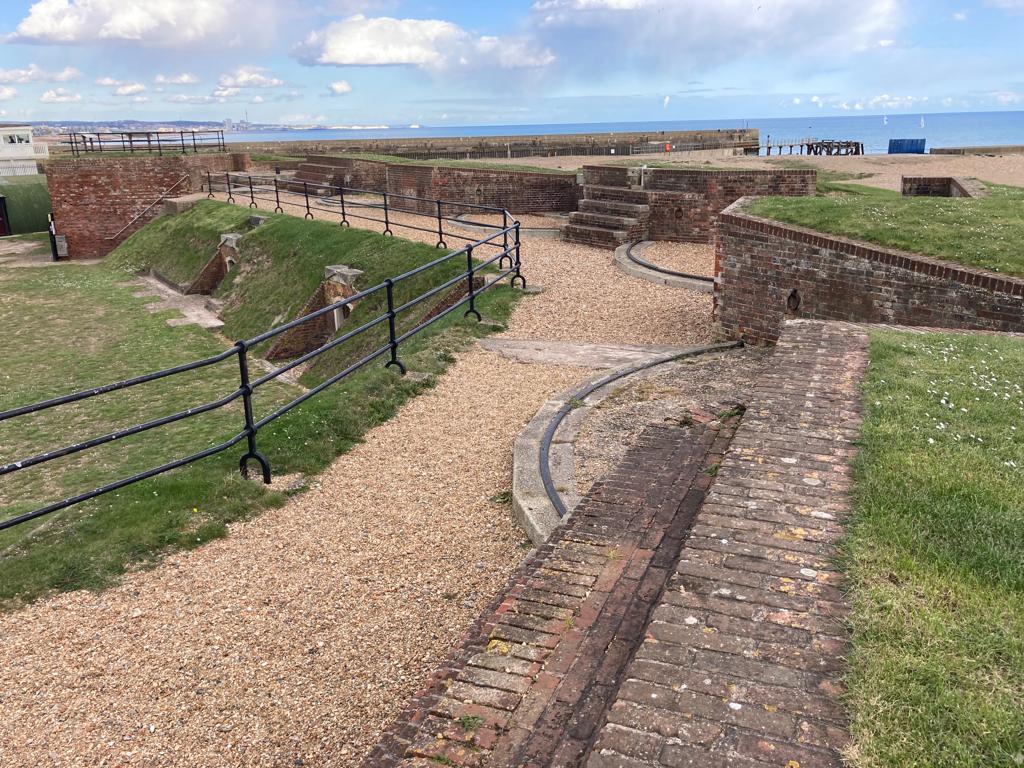
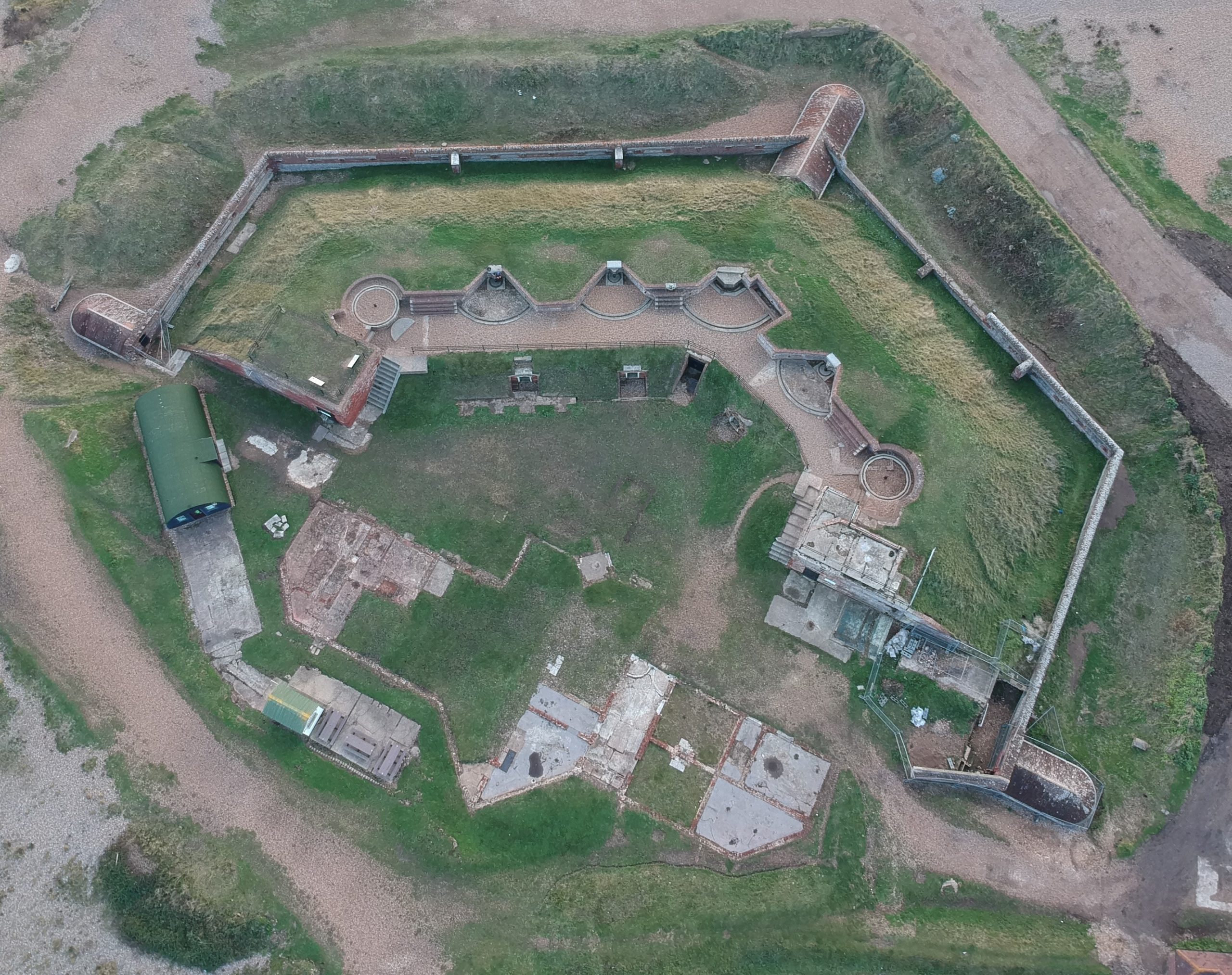
At their October meeting, members of Ferring Conservation Group were treated to an excellent presentation by Gary Baines from the Friends of Shoreham Fort, entitled “Shoreham Fort – Past, Present and Future”. The aims of the Friends group are to conserve, maintain and restore the fort (which is designated as an Ancient Scheduled Monument) back to its 1857 former glory, so the talk fitted in well with our interests in the local built environment as well as the natural world.

They were told that the fort is now only one of two along the South Coast in anything like their original form – the other being at Littlehampton – and were built as a protection against possible French invasion during the Napoleonic period. It was manned by the 1st Sussex Artillery Volunteers and was designed to position six muzzle loaded guns giving good cover against attack. It was still operative beyond the turn of the century with one cannon remaining in place until the end of WW1, when the fort had been used for training and storage.

Prior to that in 1913, a Francis Lyndhurst (Grandfather of actor Nicholas Lyndhurst) brought film making to the fort, where at least 4 films were made within its confines. Subsequently during WW2, more guns were installed there but have since been removed, with only the original footings surviving.

Then into the 1970s and 80s, some restoration of the fort started, with the Friends group being launched later on in 2010, which really accelerated matters. Much restoration work has already been completed, for example on the Caponiers (or covered bastions) and also the gun emplacements, and also a Nissen hut from Chidham has been installed there, along with an atmospheric memorial WW1 training trench, constructed from 2800 filled sandbags.

For the future, it is hoped for a full restoration of the fort including the reinstatement of the barrack block, which would create a multi purpose community facility. There is no doubt that it is a fine local historical asset and a visit there is very much recommended.


Our Rivers – the work of the Environment Agency

Ferring Conservation Group had an interesting talk on Friday [27 September] from local resident Damon Block, a senior officer in the Environment Agency, about the organisation’s work managing the state of our rivers and coastal waters.  Damon had begun there as a Water Bailiff, supervising fishing on our local rivers – still an important task of the Agency and a source of income from rod licences.  Now he was looking after all the Sussex rivers from the Ouse to the Ems on the Hampshire border, for water quality, flood control and ‘abstraction’ by farmers for irrigation.

Water quality was gauged by the species of invertebrates of various kinds that could tolerate different levels of contamination and oxygen deprivation, as well as chemical testing. The problems arose not only from discharges and run-off but also from invasive plant species like Crassula and Himalayan Balsam, which could choke streams and destabilise banks.

The Ferring Rife, he said, was fairly easy to manage – quite a small catchment area, with few discharges, good flood defences, no fishing but plenty of wildlife. It had been good to see  Water Voles getting established there. Other rivers like the Arun and the Adur were more complex both in their needs and threats, and the opportunities they offered for better habitat creation and the reintroduction of species like the otters on the Rother tributary.

Sussex had a good stock of fish in its rivers – eels were abundant here while declining nationally, and Sussex sea trout were the biggest and best in England. He explained that river trout and sea trout were the same species but had chosen different ‘lifestyles’ at an early age. Scales from these fish were, under a microscope, like sections of trees – showing measurable growth rings, evidence of how and where they had lived and spawned, and another good indicator of water quality.

A very interesting and enjoyable afternoon.

(Report written by Ed Miller)

The Long Walk Home – 26 July

After a gap of several years Michael Blencowe returned to Ferring Conservation Group to regale members and visitors alike with tales of his epic walk of 348 miles from his current home in Sussex back to his childhood roots in Devon.

Now a freelance naturalist, author and wildlife guide, Michael felt compelled to complete this walk after suffering what he was told to be a heart attack, which thankfully turned out to be a false alarm. Michael has a unique ability to educate and entertain us all at the same time and in March 2023 laden with an enormous rucksack containing 15 maps, numerous blister packs, a jar of Bovril etc, and with the aid of walking poles, he set out on the first leg of his journey walking from Small Dole to Amberley. Blistered feet were a big problem for Michael and set in soon after departure, so Michael’s blister packs were soon depleted.

Along the route Michael visited the charming 13th century church of St Andrew’s in Didling known as the Shepherd’s Church nestled in the South Downs in an isolated spot – it has no electricity supply and is lit by candles. When a shepherd was buried, traditionally a piece of sheep’s wool was placed in his folded hands – this was to ensure that at the Pearly Gates, St Peter would understand that the shepherd was often absent from church as he had to tend his sheep.

Michael delighted in the wildlife that he encountered along the route including Yellowhammers, boxing Hares, Redwing, Fieldfare and Peregrine Falcons to name but a few. On reaching Dorset on Day 10 with over 100 miles covered, Michael woke to find a thick layer of snow had obliterated many landmarks making his journey difficult to navigate. As the snow melted and with a splendid view of the Jurassic coastline visible he made his way inland to the town of Bridport. The South West Coastal Path lay 14 miles away towards Lyme Regis and then a further 10 miles into Beer and his home county of Devon.

It was around this time that Michael decided to exchange his large backpack for a much smaller version which made his walk through to Dartmouth much easier. Seeing much of the Gorse in bloom lifted Michael’s spirits as he continued his journey to the town of Salcombe and in doing so completing approximately 300 miles. Passing the Start Point Lighthouse at Kingsbridge, then through Bantham, Bigbury with views of Burgh Island, Ermington, Elburton and Yealmpton and finally arriving at his childhood home in the city of Plymouth – 22 days and 348 miles later. With great relief he had achieved his goal but he did note that the journey back to Michael’s home in Sussex by car took only 4 hours.

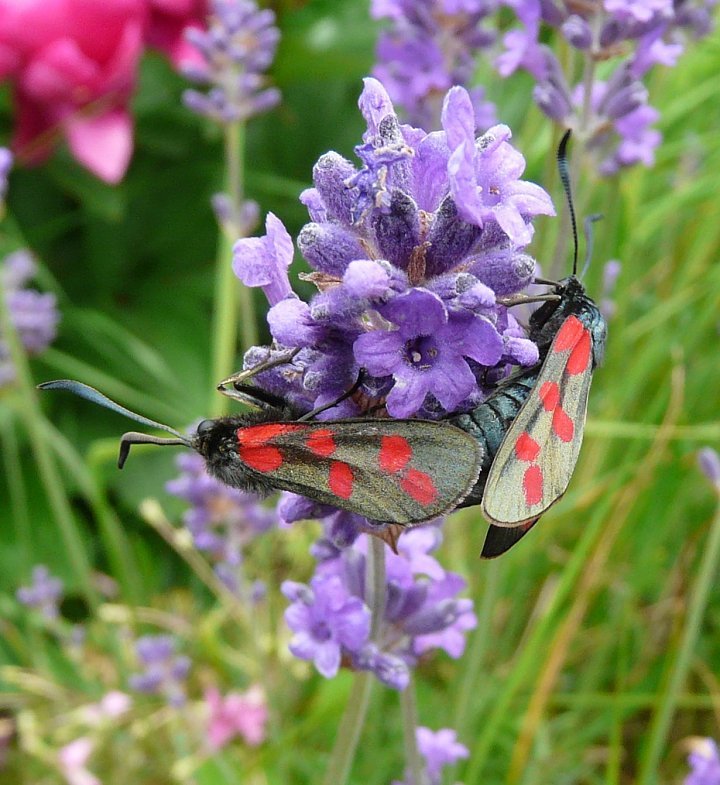
Graham Tuppen presented the Nature Notes slot after the usual break for refreshments by showing members a series of excellent photographs including a Cinnabar moth on a Ragwort plant, a Cricket on a Marigold flower and the beautiful wild flower bed in the Glebelands recreation ground (all of the wild flower beds in the village have been exceptional this year). A photograph of the blue flax flowers growing in the fields of Chatsmore Farm plus a six-spot Burnet Moth on a Round-headed Rampion plant. There were also reports of Little Egrets and Herons on the Ferring Rife, together with sightings of Greenfinch, Goldfinch, Long-tailed Tits and a Buzzard.

A planning update was delivered by Stephen Abbott to conclude the meeting, with no further planning applications submitted.

The additional house in the garden of 44, Ferringham Lane had been refused by Arun DC and an Arun proposal to increase the number of beach huts along this stretch of the coastline is under consultation with the relevant Parish Councils, including Ferring.