Summer Social

We’re holding our annual Summer social on the evening of Saturday 19 August, and this year it will be at the St. Andrew’s Church Centre, starting at 6.30pm.

There will be a choice of hot buffet main meals, with salads and bread etc, then a choice of desserts and cream to follow, plus one free drink will be included. There will also be a series of fun quizzes with prizes to entertain you and a raffle, so should be an evening of good company and good food as usual.

Tickets are priced at £12.50 per person. These can be bought at our stall at the Ferring  Village Fair at Glebelands recreation ground next Saurday 8 July between 11am and 4pm, or at our next meeting at the Village Hall on Friday 28 July. Alternatively, you can ring David Bettiss on 07502 176374 or send a message via the Contact button on this website to arrange purchase outside the above two occasions. We would ask that you pay at the time as this year we won’t be able to save tickets to be paid “on the door” on the night.

Stinging Nettles

Stinging Nettles, by Michael Blencowe of the Sussex Wildlife Trust

In the shadows under the Oak trees my enemy awaits. There are hundreds of them, huddled together in a silent, ferocious mob. With their drab green leaves and insignificant flowers, the Stinging Nettle is a joyless plant infamous only for its ability to inflict pain. I can almost hear these nettles straining at their roots, desperately trying to reach me because I am in possession of something they crave: a pair of bare legs. When I started writing this article, I realised that I hadn’t been stung by a Stinging Nettle for so long that I had forgotten what it felt like. So, dear reader, just for you I am wading into a nettle patch in a pair of shorts.

As my legs brush the underside of the nettles’ leaves, I break the fragile tips off hundreds of hollow hairs, and I’m injected with histamine, serotonin and acetylcholine, with a splash of formic acid. This volatile cocktail acts like napalm on my knees – my skin itches and blisters and that familiar fiery, tingling, pulsing pain sears up my spinal cord. The plant does not inflict this agony as some sadistic vendetta against schoolchildren and writers. The nettle’s hairy, hurtful suit of armour is a defence mechanism against hungry herbivores.

Despite our hatred for the Stinging Nettle, we have found many uses for it over the centuries as cloth, medicine, and food. Seventeenth century Sussex herbalist Nicholas Culpeper claimed nettles – which “can be found by feeling in the darkest night” – cured everything from nosebleeds to leprosy. Celebrity chefs extol the virtues of vitamin-packed nettle soups, risottos and spanakopita. And the caterpillars of our most impressive butterflies enjoy munching on nettles too. Red Admirals, Peacocks, Commas and Small Tortoiseshells all depend on them.

Halfway through the nettle patch all this is offering me little comfort. If I focus my mind, I can rise above it and the waves of pain can start to feel strangely invigorating. But not for long and I soon start frantically searching for a cure. Rubbing mashed dock leaves on my legs has soothed my stings since I was a schoolboy, so I was surprised to read that it’s all a ruse. Scientists claim dock leaves are simply a placebo – and the searching and rubbing is just a distraction that numbs the pain.

Beyond the nettle patch I stumbled across an amazing glade of orchids, vibrant and stunning in the sunshine. In an instant the stinging stopped. Maybe it was all in my mind after all. Even when we are in our darkest night we need to keep pushing through the painful patches. There’s something surprising and soothing awaiting us on the other side.

Sussex Wildlife Trust is an independent charity caring for wildlife and habitats throughout Sussex. Founded in 1961, we have worked with local people for over half a century to make Sussex richer in wildlife.

We rely on the support of our members to help protect our rich natural heritage. Please consider supporting our work. As a member you will be invited to join Michael Blencowe on our regular wildlife walks and also enjoy free events, discounts on wildlife courses, Wildlife magazine and our Sussex guide book, Discovering Wildlife. It’s easy to join online at sussexwildlifetrust.org.uk/join
Dates for your Diary

*Update as of Mon 14 Nov – due to the poor weather forecast for this Weds of rain and strong winds, and the exposed location of the walk on the Downs, we have postponed this walk. We hope to re-schedule it soon*

Birdwatching visit to the Burgh, near Burpham village on Weds 16 November, and will be led by our local expert, Clive Hope. This area is very good for seeing raptors and game birds hopefully, with the chance of seeing a Short Eared Owl. Lifts can possibly be arranged (please make contact via the contact button on the website if required), and the meeting point will be at 1.30pm at the triangle just north of the village, where there is some parking. Binoculars would be very useful. It is expected that the visit will last 2 hours or so, but as always is weather dependent.

FCG visit to Pagham Harbour

A dozen Ferring Conservation Group members recently made their way to Pagham Harbour for their annual Spring birdwatching visit. The party, which included a couple of members making their first such visit to the harbour, was led by one of the Group’s bird experts, Clive Hope.

Weather wise, on what was forecast to be a windy day, it turned out to be pretty good, especially when there was shelter from the elements and the sun decided to shine. On the bird count, a total of 38 different species were recorded, which was thought to be quite impressive.

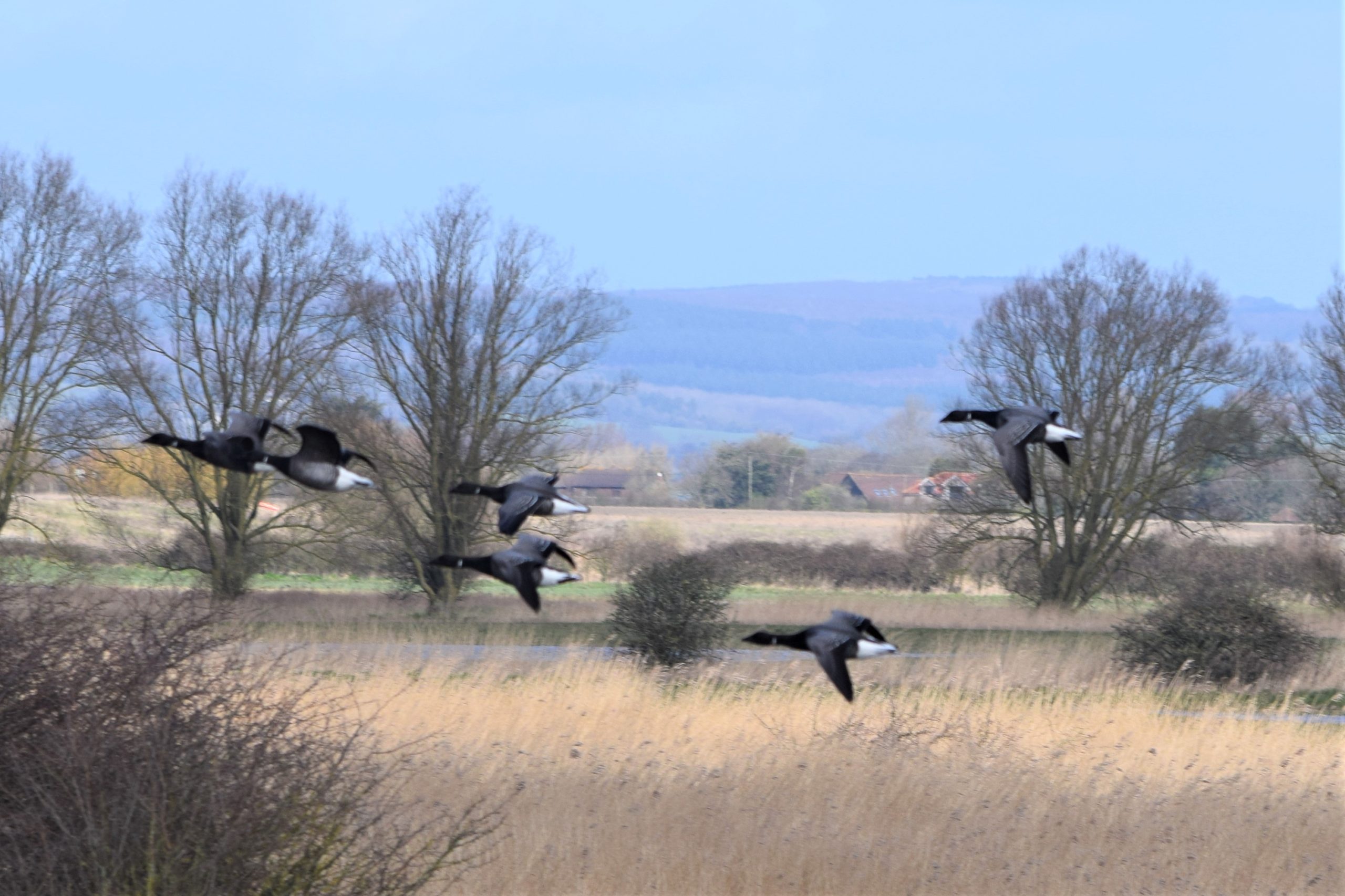
The highlight was probably the sheer number of Brent Geese seen, with a good estimate of approximately 1000 in total, and many of these were probably preparing to make their migratory trip back to their breeding grounds in Europe. They made a spectacular sight, especially when some of them took to the air, probably spooked by an unseen raptor.

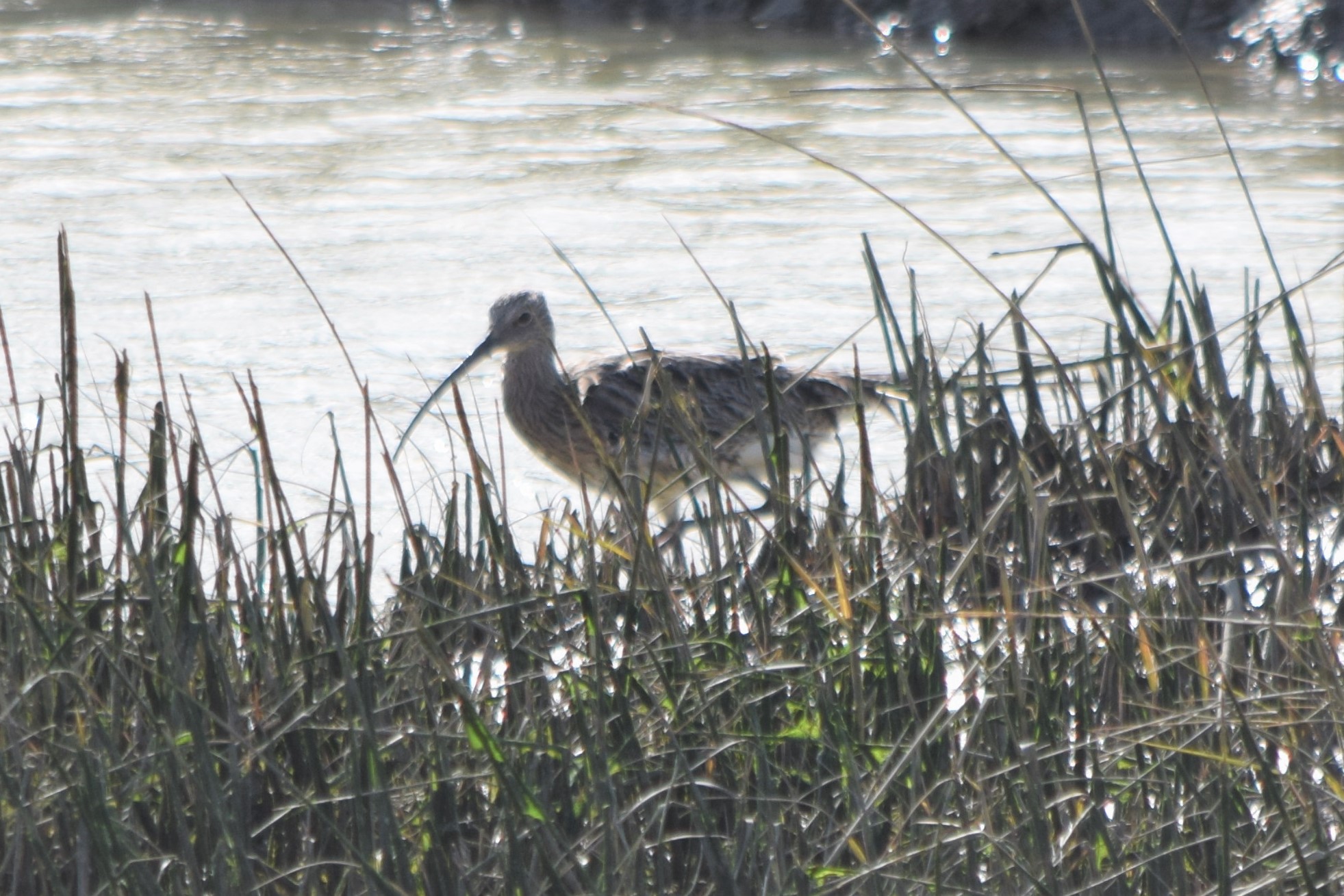
Some of the other birds seen included Great Crested Grebe, about 20 Pintail, Ringed Plover, Grey Plover, Knot, Black-tailed Godwit, Curlew, Redshank and even a Green Woodpecker.

A couple of enjoyable hours was considered a suitable time period, before the party repaired to the local café for a spot of lunch before returning home to Ferring. This really is a worthwhile and informative way to get out into the Sussex countryside in good company and with expert guides to learn more about our local wildlife. If you haven’t been out for a trip with the Group before, then it’s definitely worth considering in the future.

Nestbox Survey

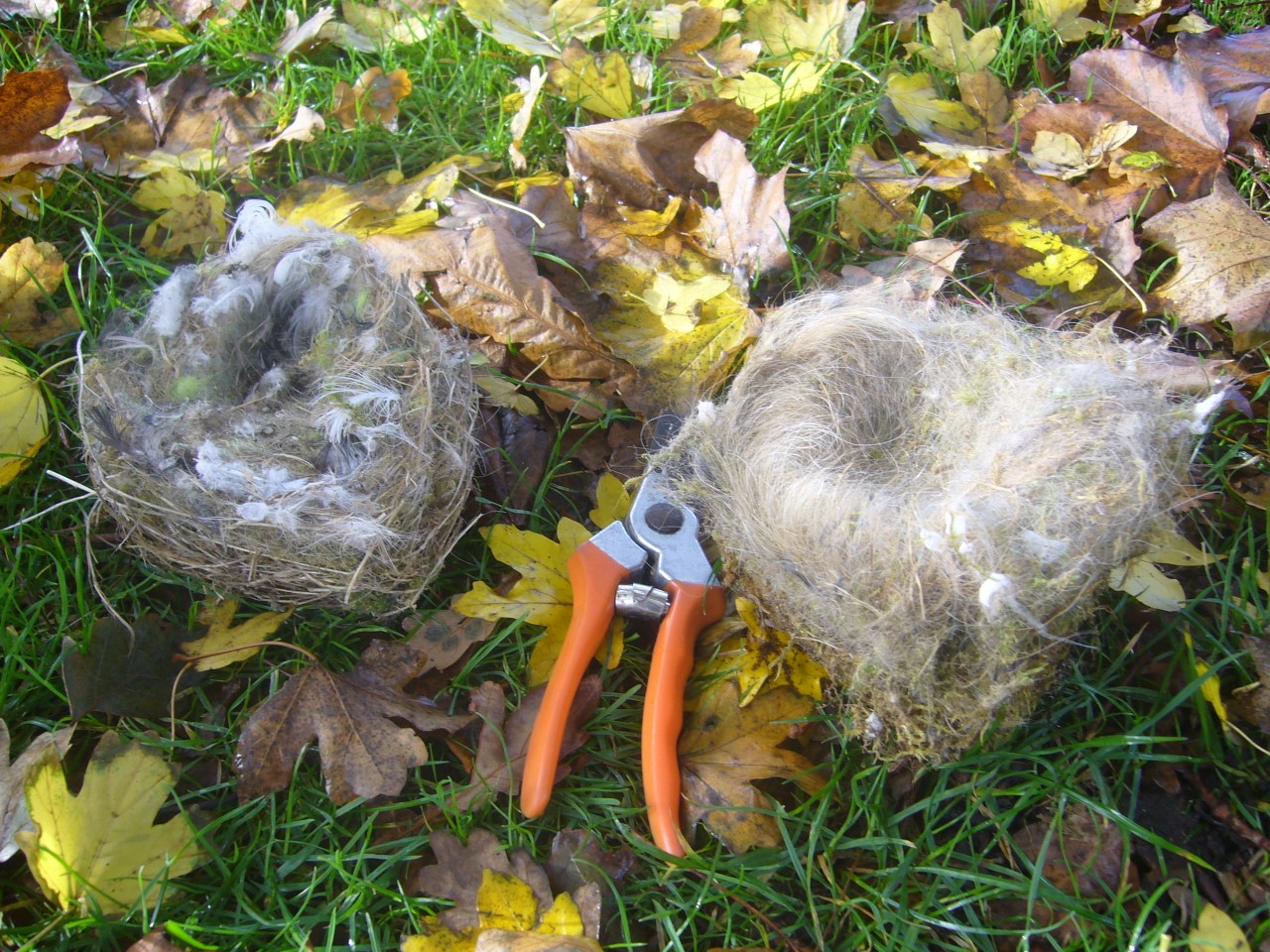
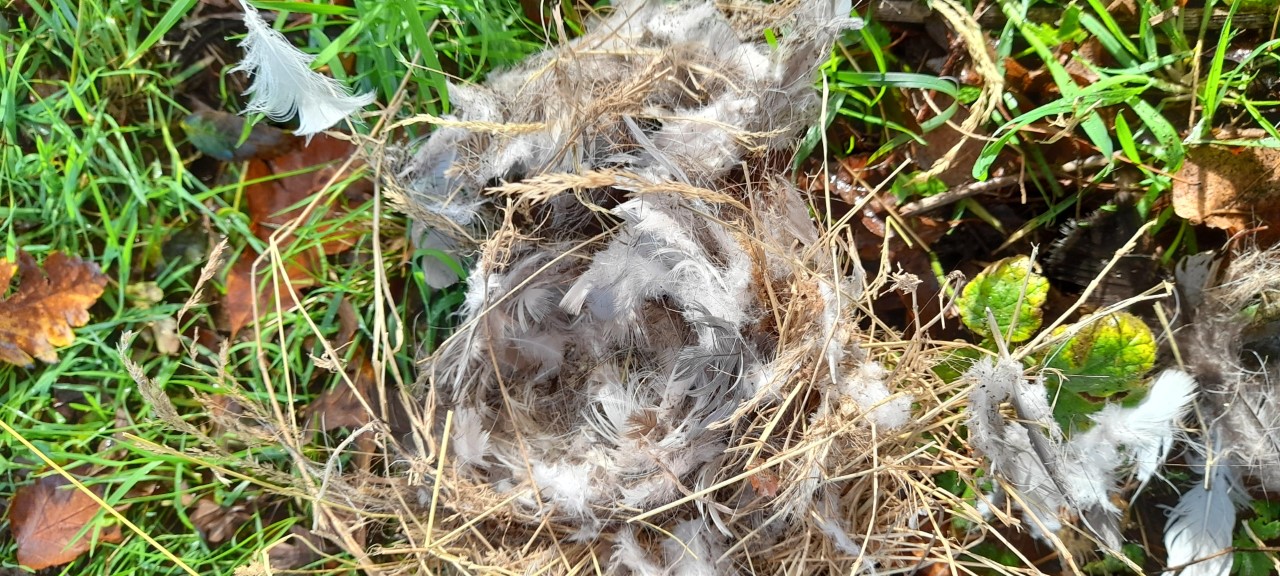
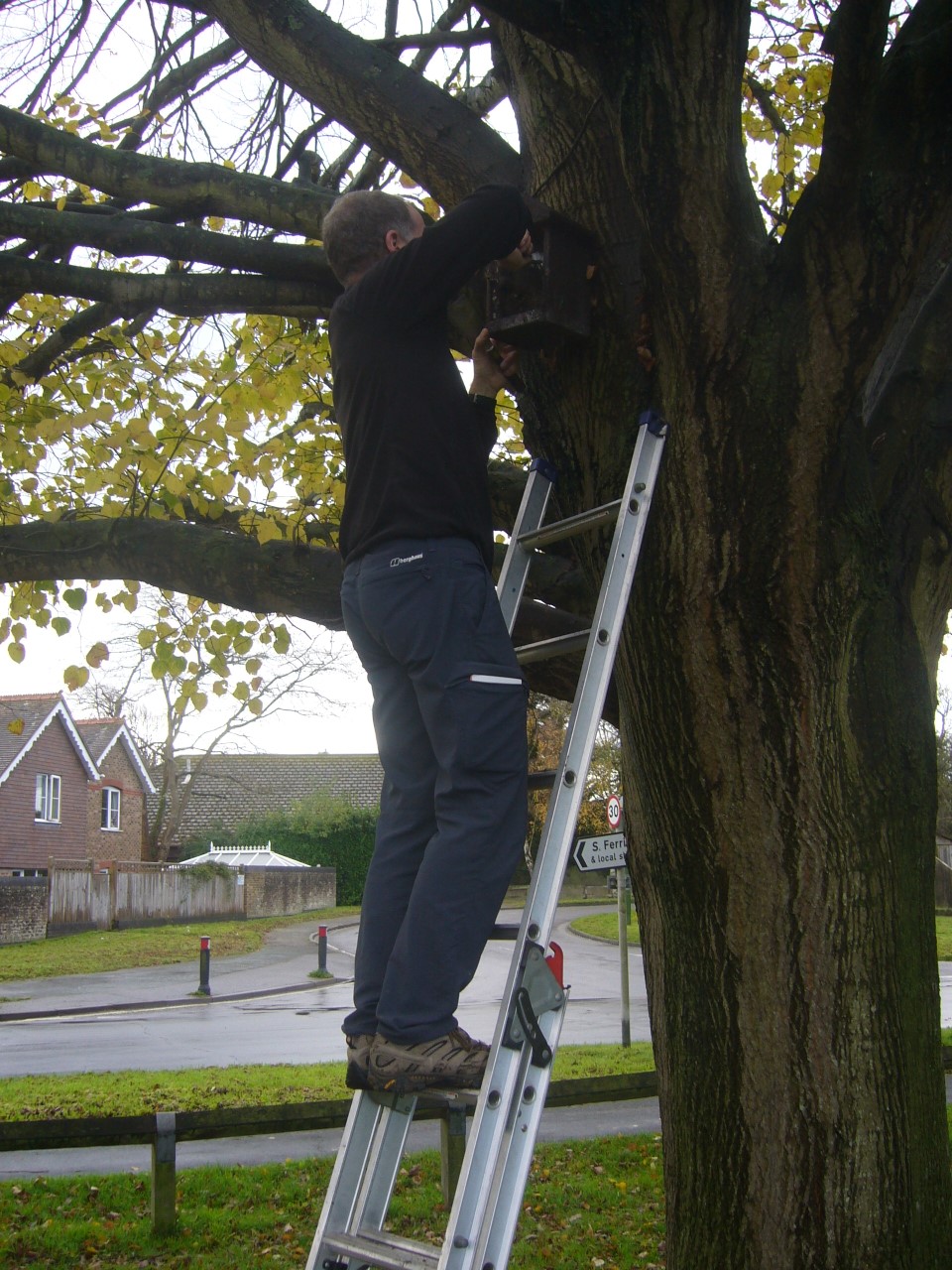
Recently, committee member Graham Tuppen and Chairman, David Bettiss carried out our annual survey and cleaning of the various bird nest boxes around the public places in the village. These are situated at Little Twitten, the Village Green and Glebelands, as well as the Ferring Country Centre. It was really pleasing to report that all bar one of the boxes had been used by birds during the past Summer, with nests present in them.

The nests were made up of different materials, with the most common being mosses and feathers, while on the Village Green, one had a large amount of hair, with the Country Centre ones unsurprisingly having a lot of straw and hay present. In one box, there were a number of abandoned eggs (probably Blue Tits), in one a dead Great Tit, in another a couple of very young dead Blue Tits, and finally one had a large circular hole drilled into the front of the box right next to the official hole which had been protected by a metal plate. This was presumably done by a Woodpecker, and could even have been used by them as their own nest.

We hope that all the remaining boxes had raised at least one or maybe more successful broods, and even those above would have raised some chicks. Anyway all of them are now clean and ready to welcome new occupants in the Spring of 2021.

Future meetings and activities

Due to the ongoing Coronavirus situation, we have had to cancel the planned beach clean on Saturday 16 May and the next members’ meeting on Friday 29 May. We continue to keep our future meetings and activities under regular review, but will of course abide by Government regulations and advice. Any updates on our activities will be posted here as well as in our regular e mails to members.

Cancellation of Members Meetings

Due to the ongoing Coronavirus situation, we are cancelling the next two members meetings in March and April. We’ll be reviewing the situation after that, and hope to be resuming the meetings once things have improved.


Group Visit to Pagham Harbour

A small group of members made their Spring visit to the North Wall at Pagham Harbour, ably led by our local birdwatching expert Clive Hope. It was a windy and pretty chilly day, but this didn’t seem to put off the birds. Luckily we managed to avoid the threatened showers, but the wet winter meant that the nearby fields were generally flooded. This though did seem to attract many birds in good numbers, with an excellent total of 37 different species seen.

The highlights of the day were a large group of up to 16 Cattle Egrets which were showing well, alongside a healthy population of Grey Herons who were probably breeding in the nearby trees. It would be great if the Egrets follow suit and start breeding there. There were also in the region of 400 or so Black-Tailed Godwits – an impressive sight whenever they took to the air, something in the region of 40-50 Curlew with their haunting winter calls, and scores of Dark-Bellied Brent Geese flying overhead to the nearby fields when the tide was rising in the harbour.

All in all, it was a most enjoyable birdwatching visit to a wonderful location which is only about half an hour away from us, and was capped off with a visit to the nearby cafe in Pagham village for lunch before returning home.